
Winter Ice Fishing- Fish Handling
Winter Ice Fishing Fish Handling
By Keith Denoncourt
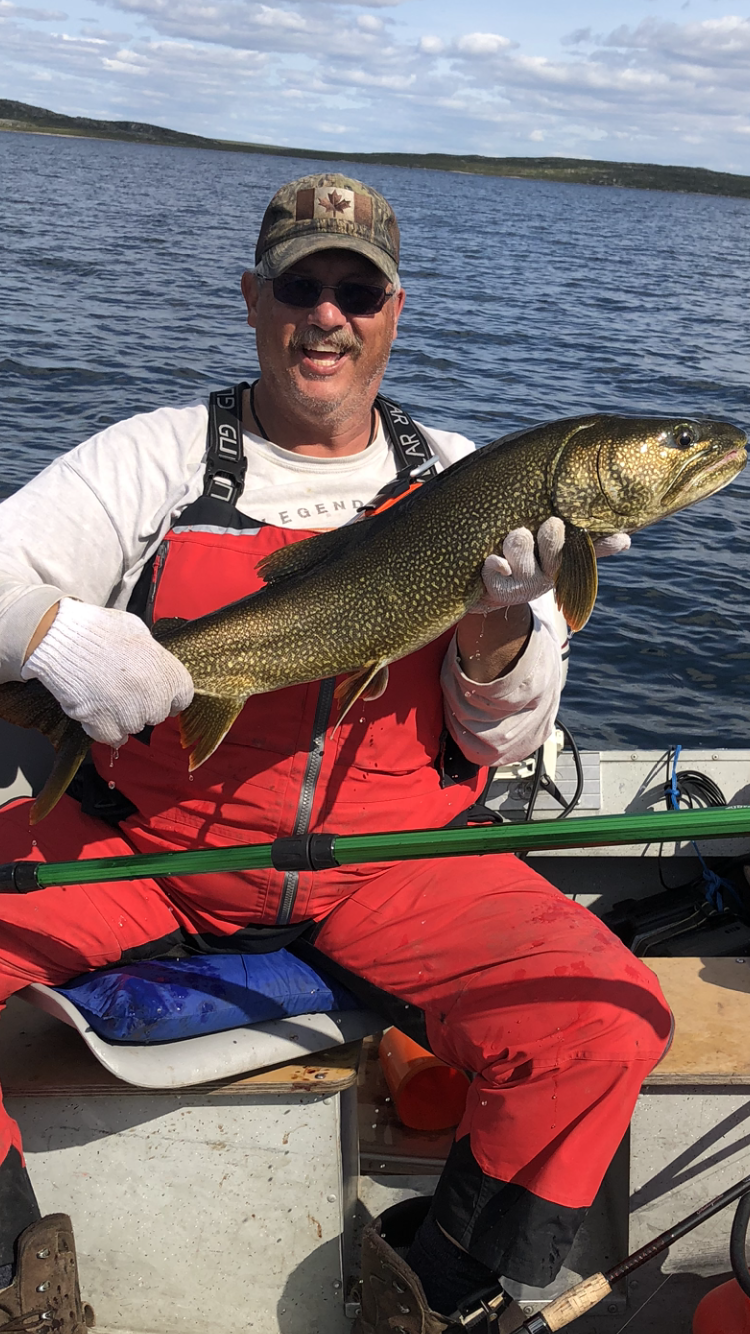
I have been very Blessed that Fishing Education has been part of my lifestyle for well over 30 years. This is a live release Lake Trout caught at Aylmer Lake Lodge with Canadian Wildlife Adventures.
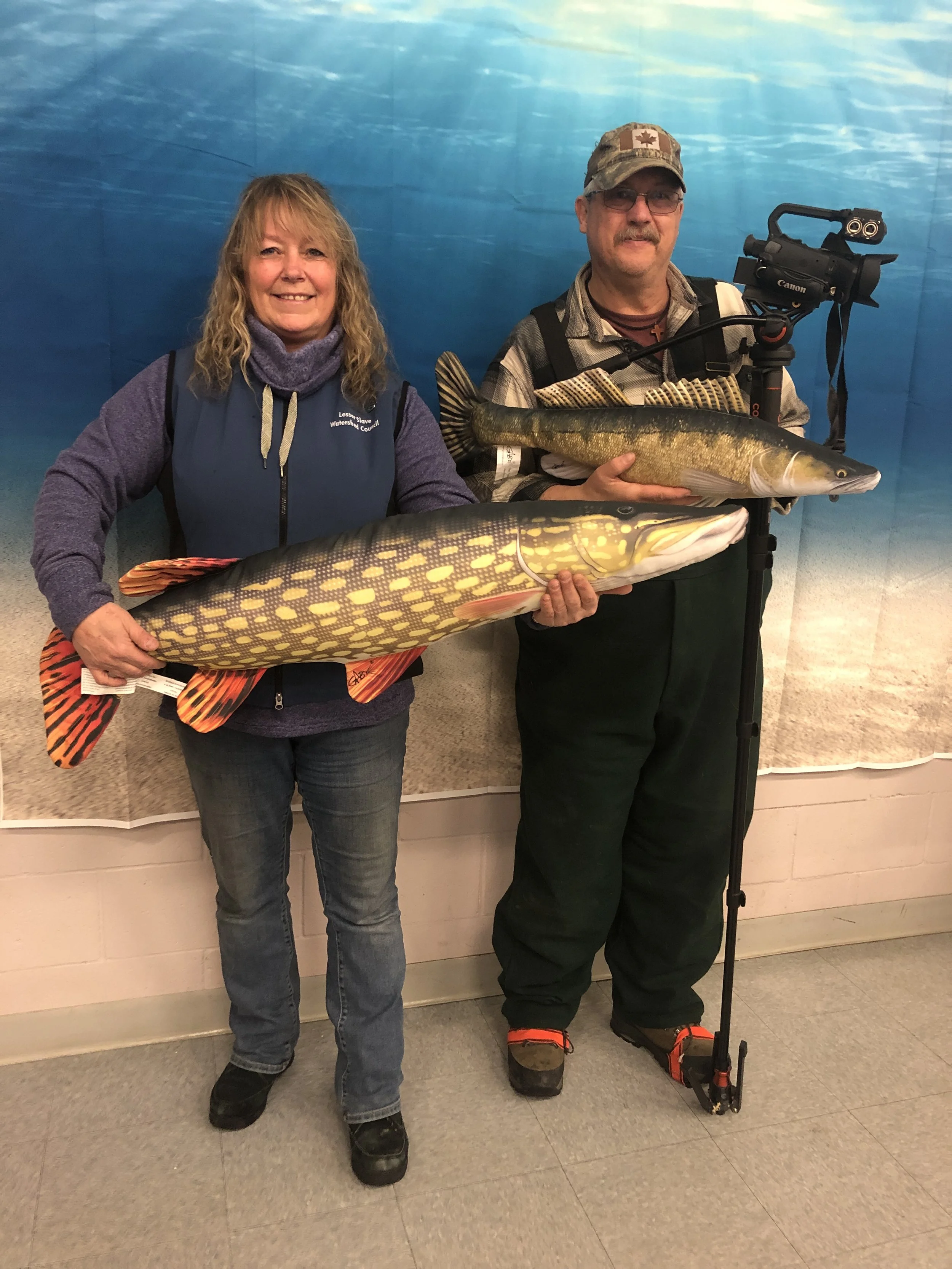
Around 30 years ago, Tammy K. was a Fisheries Biologist. I was very Blessed to have volunteered to take part in some of her “Necropsy studies” from historic fishing tournaments. For a couple years myself and Tammy were active volunteer Instructor at the local Kids Can Catch Ice Fishing Days.
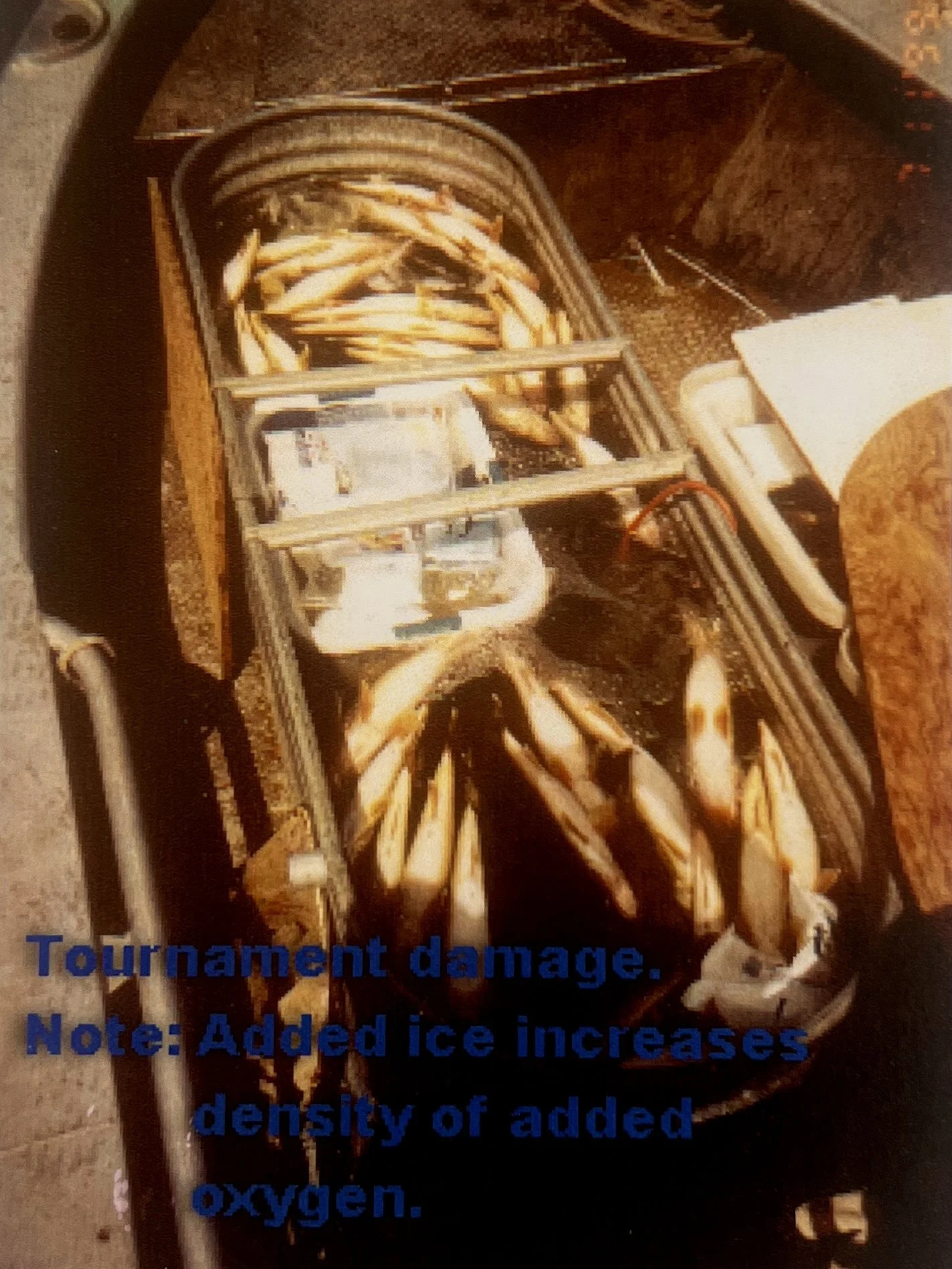
This picture was taken many, many years ago at one of our local fishing tournaments. This was one of the tubs that contained dead walleye from one of the holding cells. Every one was processed for food after the cause of death was determined. Today, the lessons learned from these historic findings have been implemented. Several changes have been adapted. These recommendations, when actively used, will mitigate any loss of life associated with live releases.
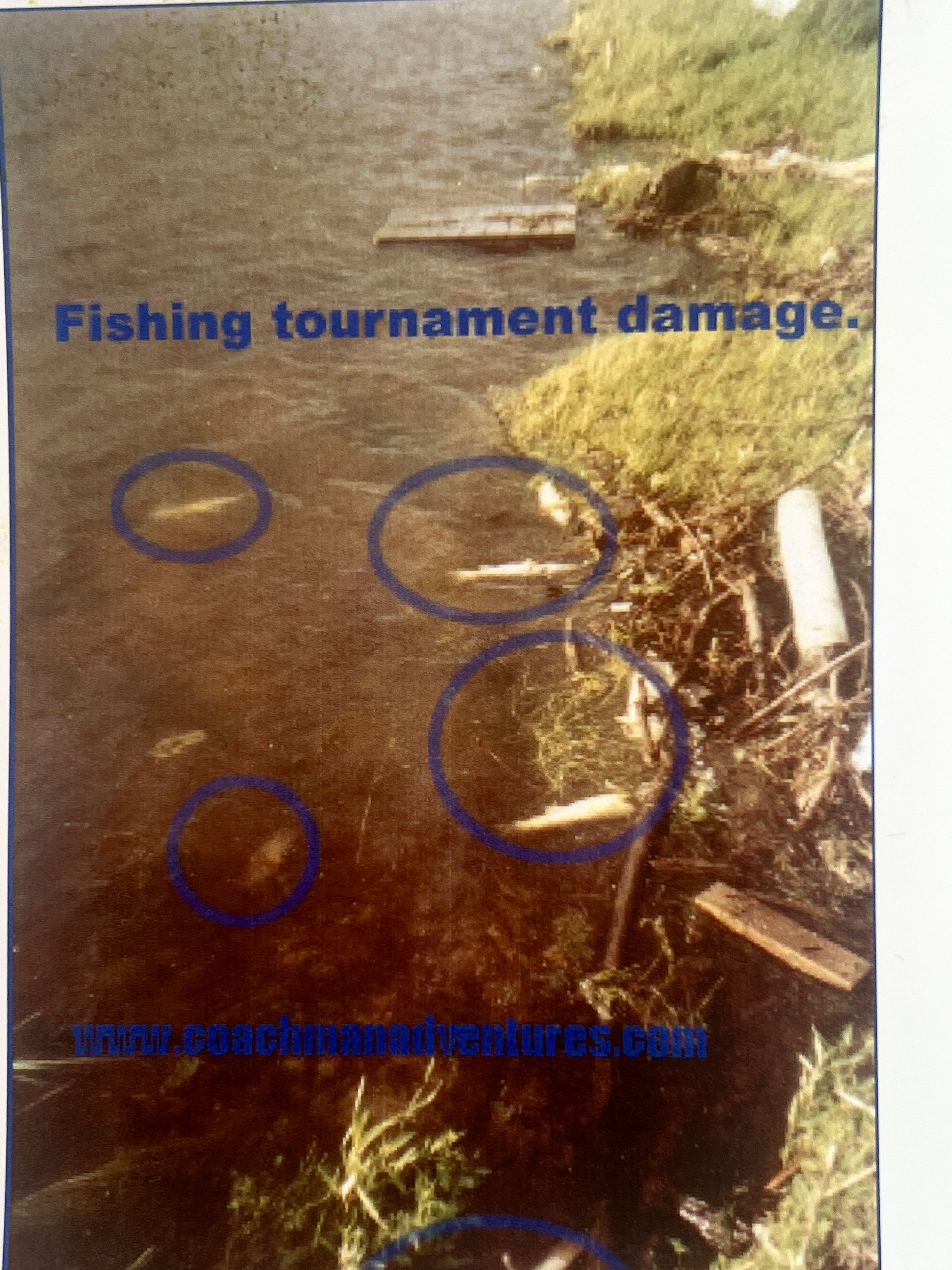
This was many many years ago. These fish were released after they were weighed in. Significant lessons have been learned, with immediate changes made.
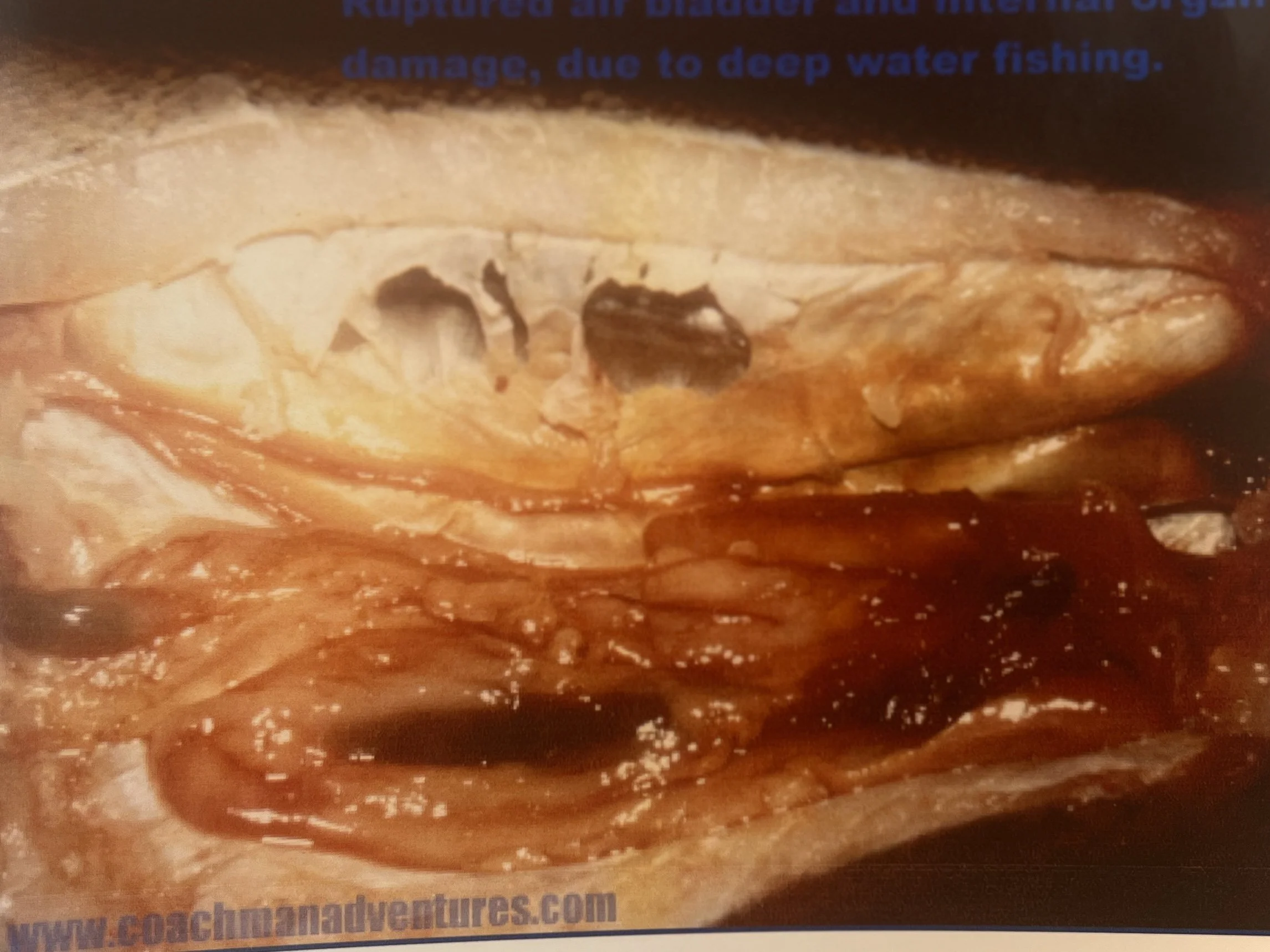
This is a ruptured air bladder in a Walleye. It was caught in greater than 20 ft of water and brought up very fast. These injuries go initially unnoticed as the fish swims away.
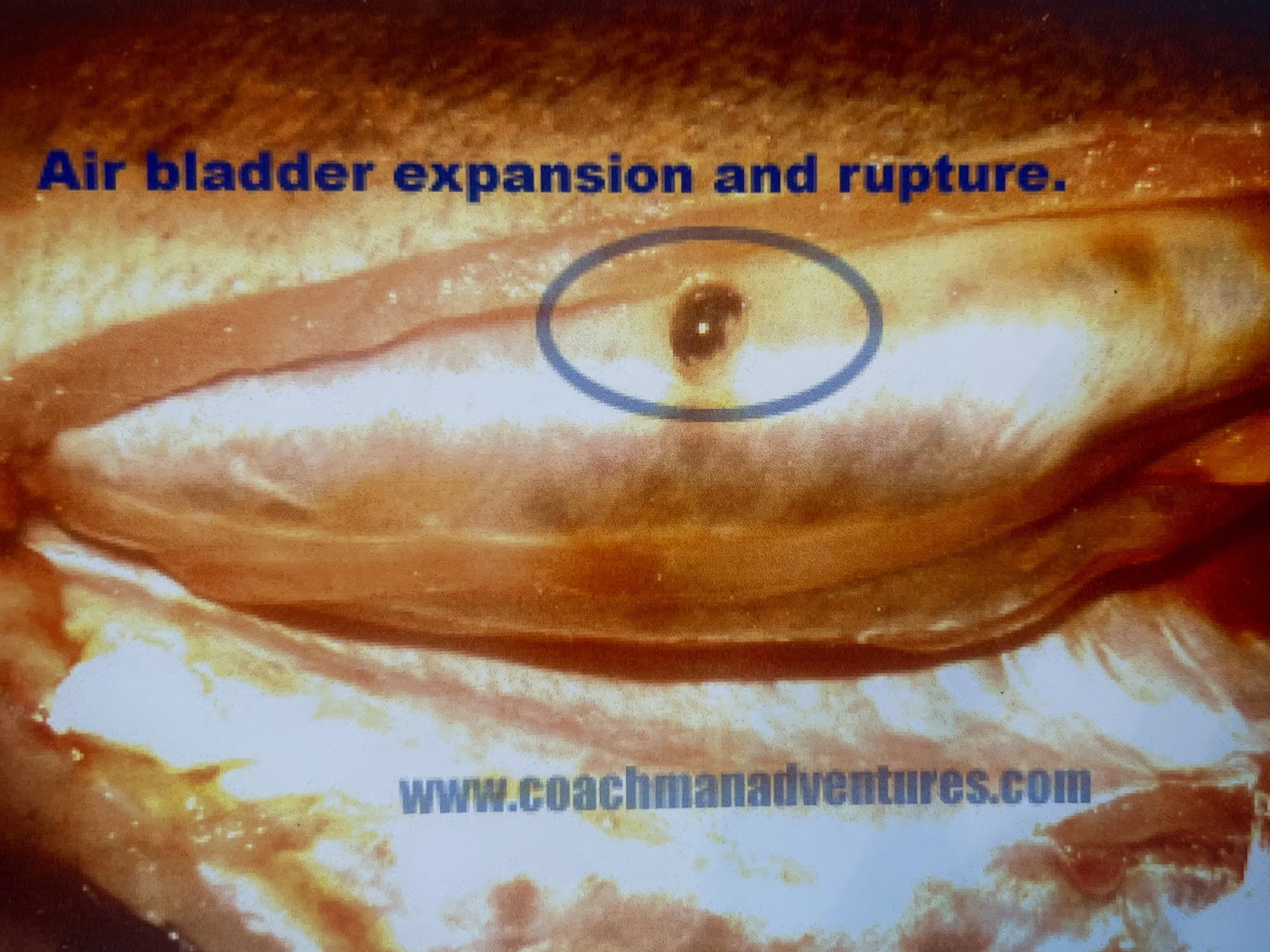
This is a hernia in the air bladder of a Walleye. It was caught in greater than 20 ft of water and brought up very fast. These injuries go initially unnoticed as the fish swims away.
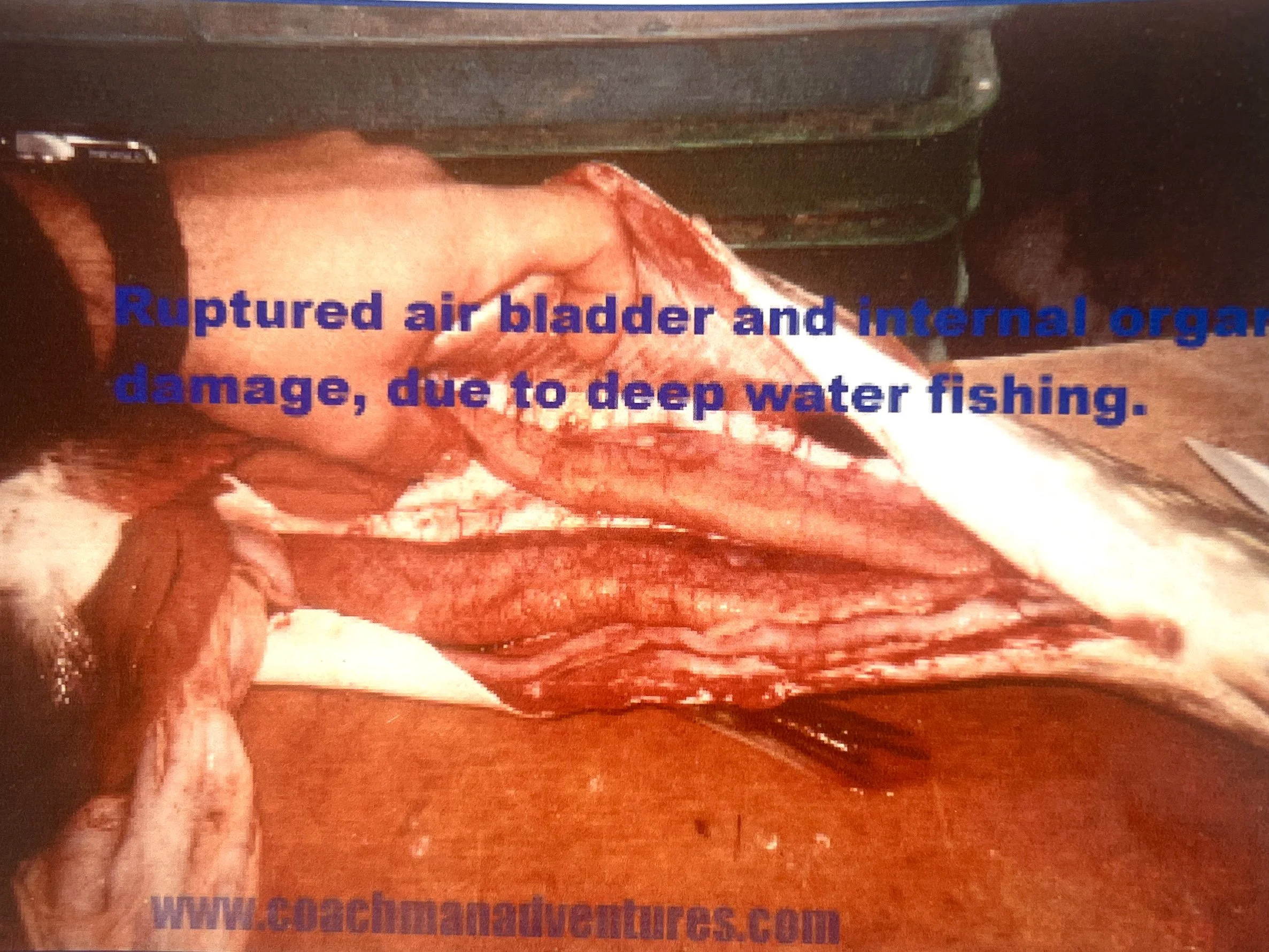
This is massive hypovolemia from bleeding out internally. Rough handling was over squeezing in suspect.
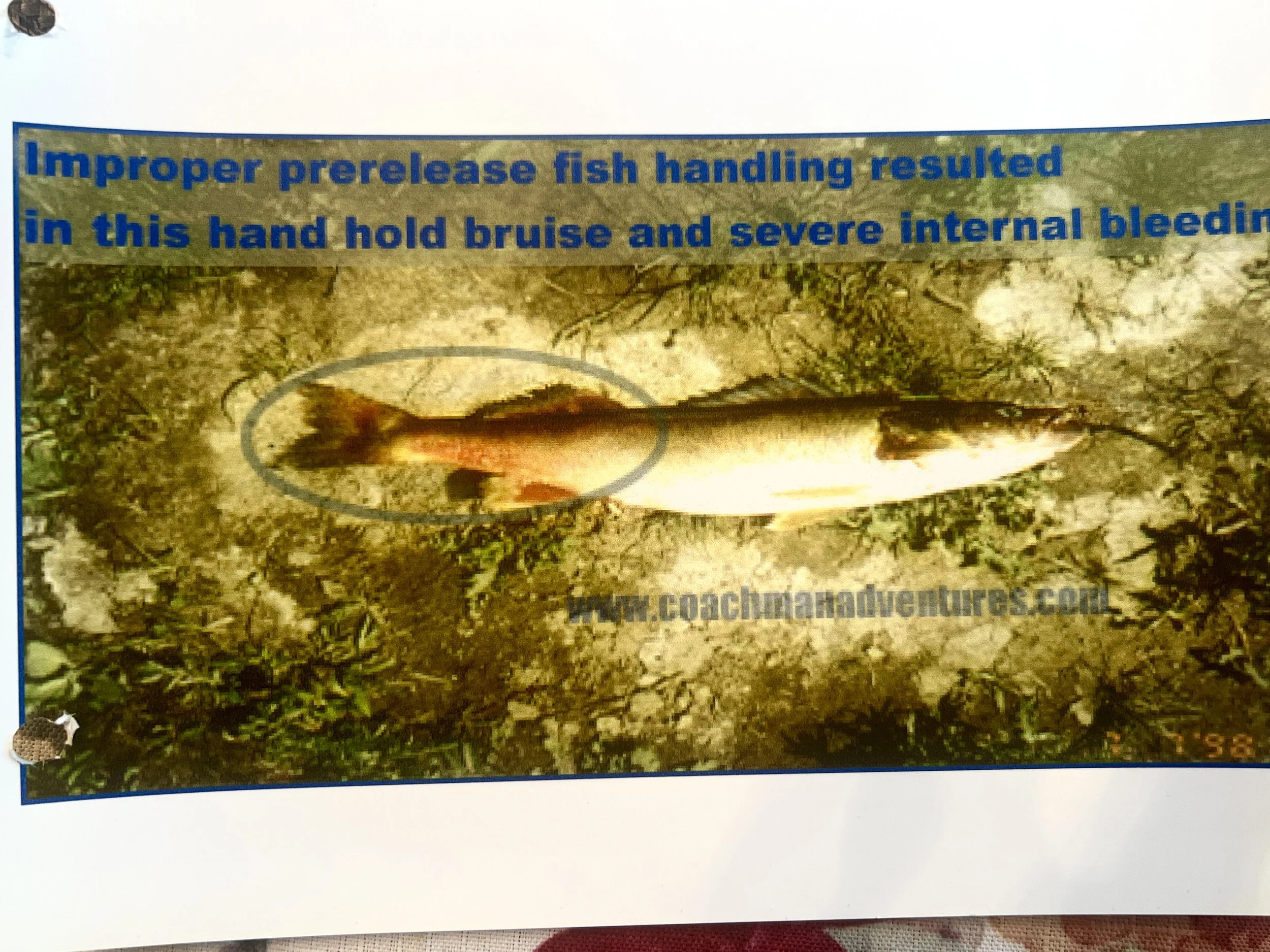
This is massive hypovolemia. Rough handling was over squeezing is suspect. The use of wet, cotton gloves prevents over squeezing, as well as the transfer of bacteria. Unfortunately one of the pictures that I once had, actually had finger / palm marks where a Walleye was held with a bare hand.
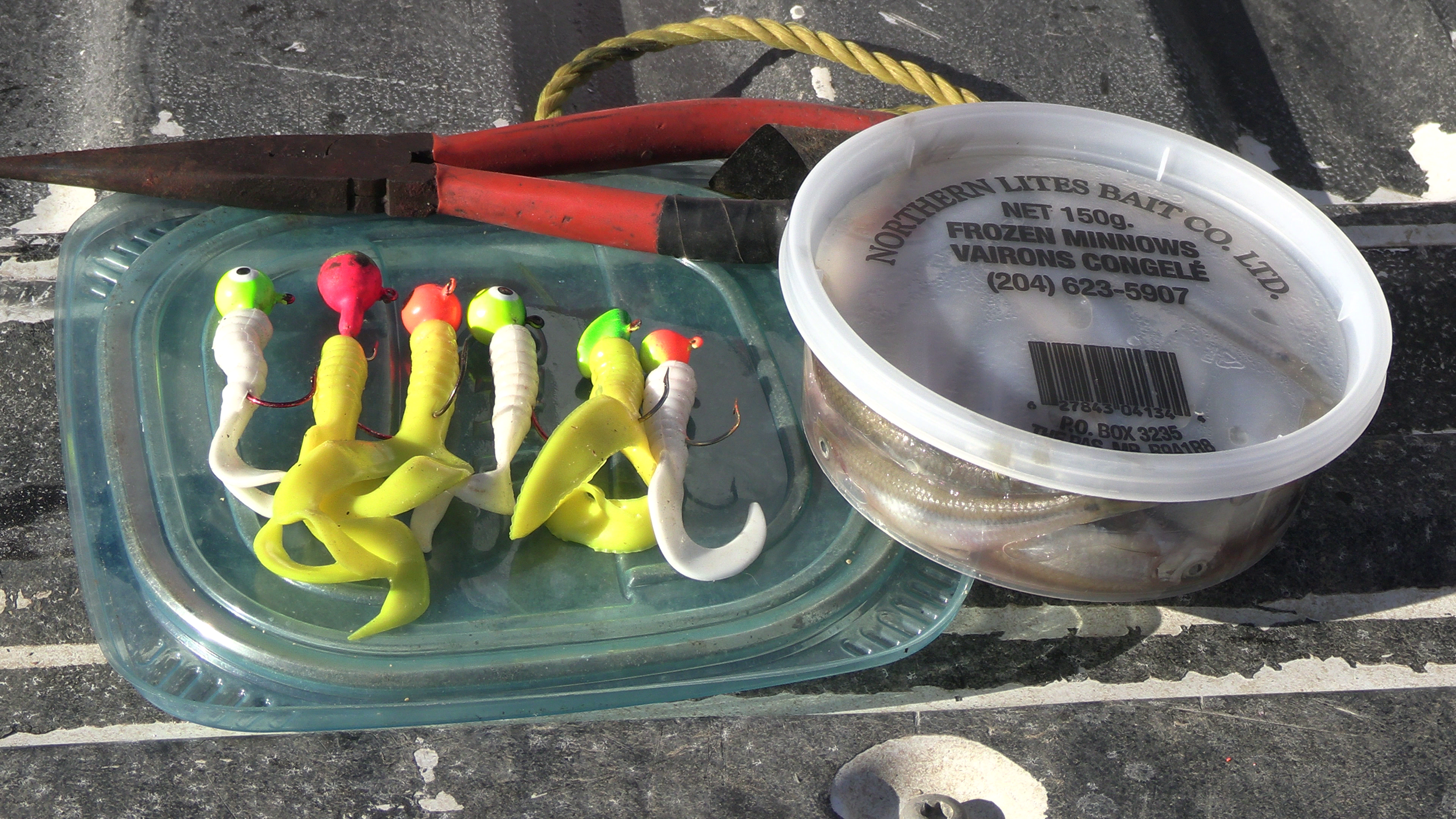
My ice fishing choice of jigs is very simple. Once I remove the barb, I use minnows for my bait of choice.
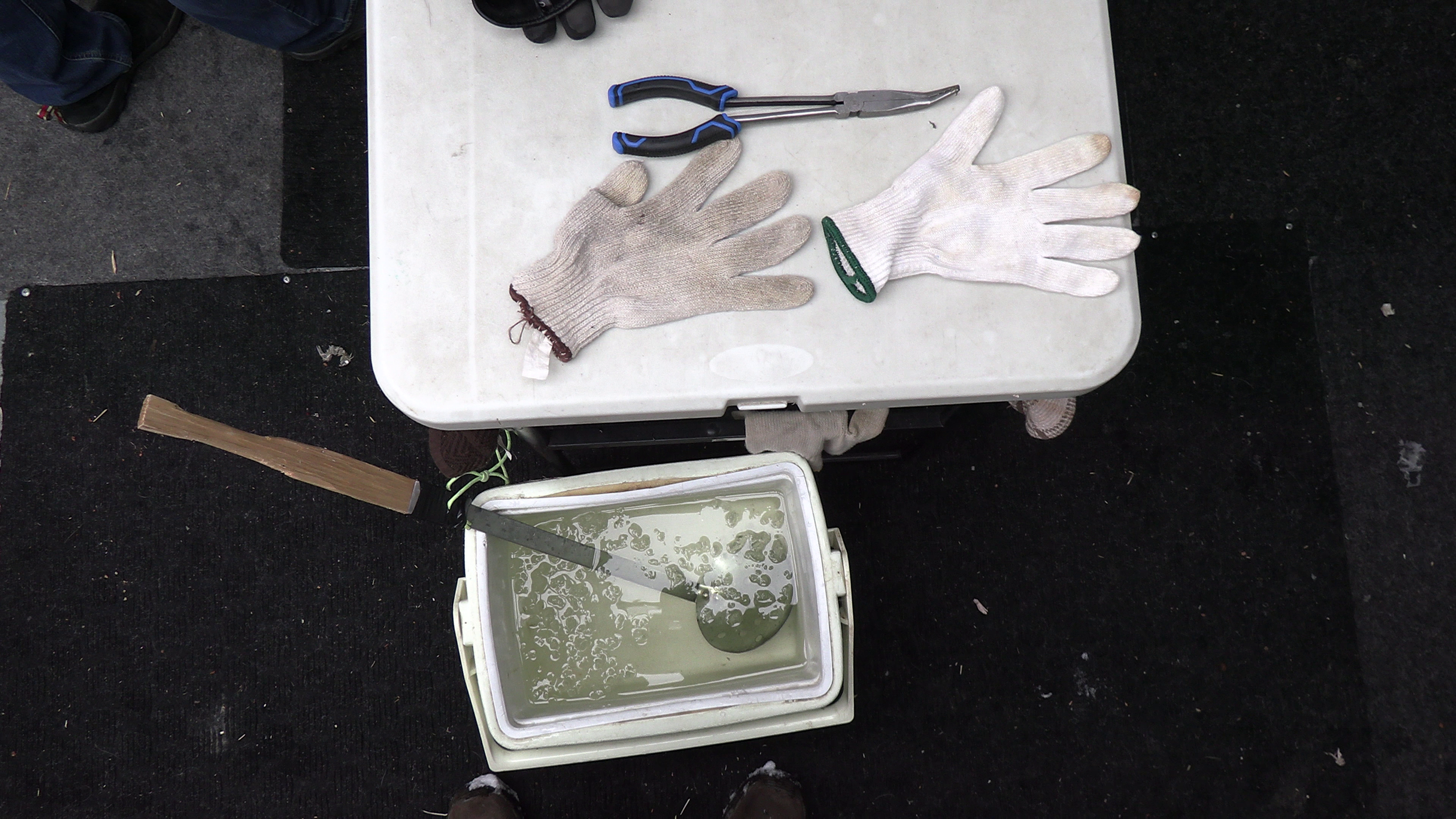
Getting ready with wet cotton gloves, pliers, with a cooler full of water for your working area, is one of the best methods of processing your fish for a live release.
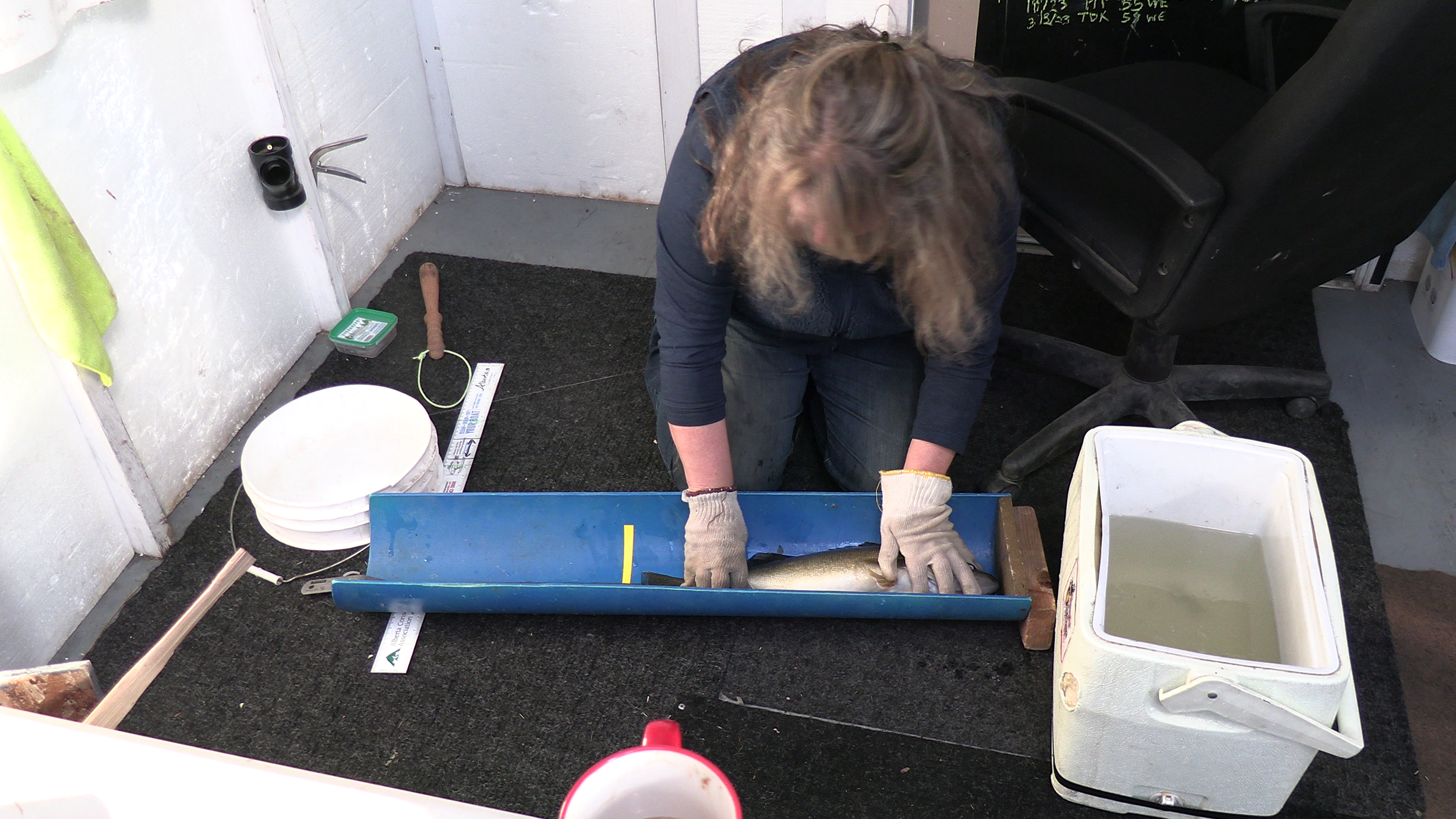
If the fish meets the legal requirements for consumption, measure the fish twice for immediate dispatch.
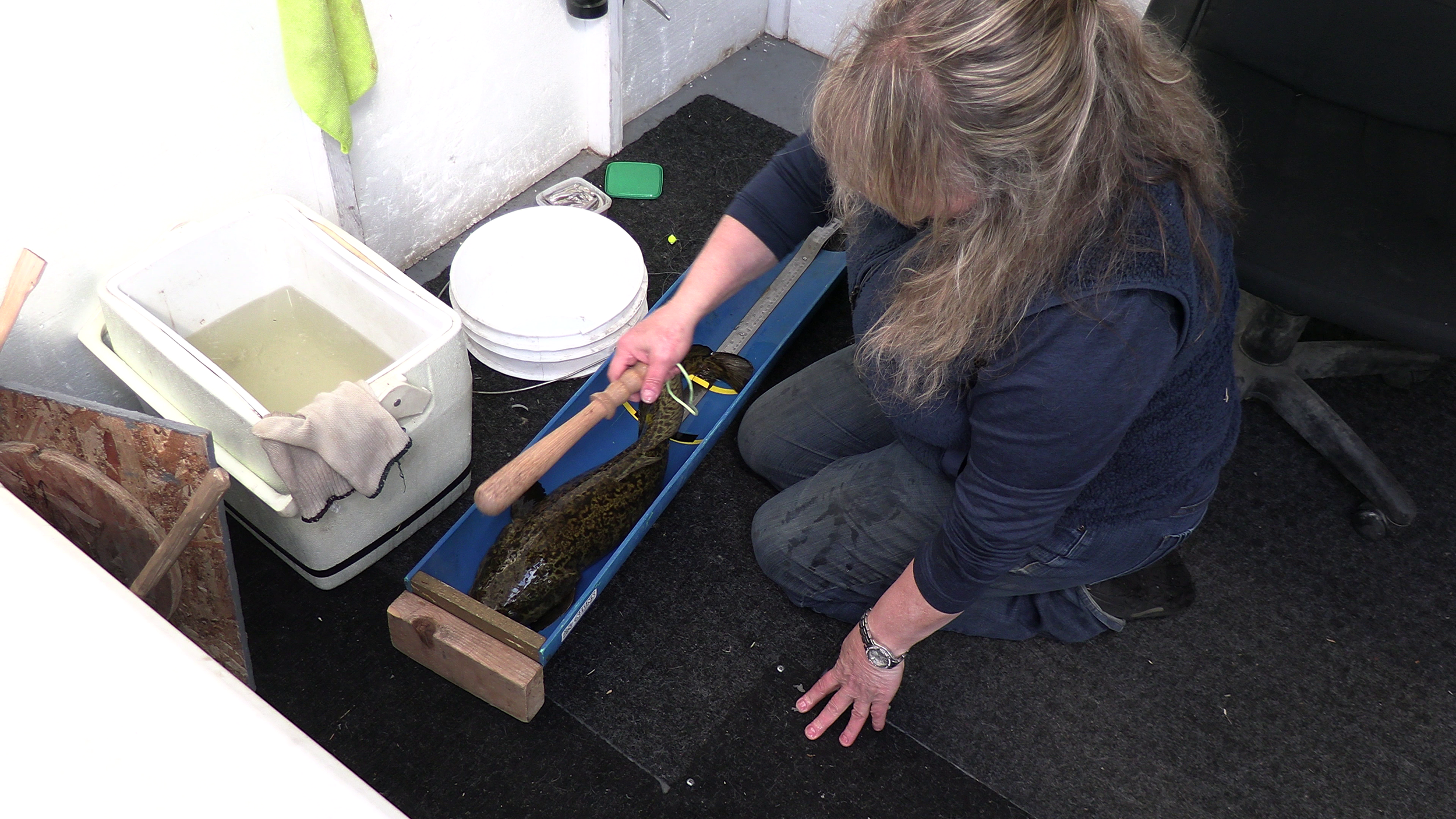
A well placed strike directly above the head in the first step of an ethical dispatch.
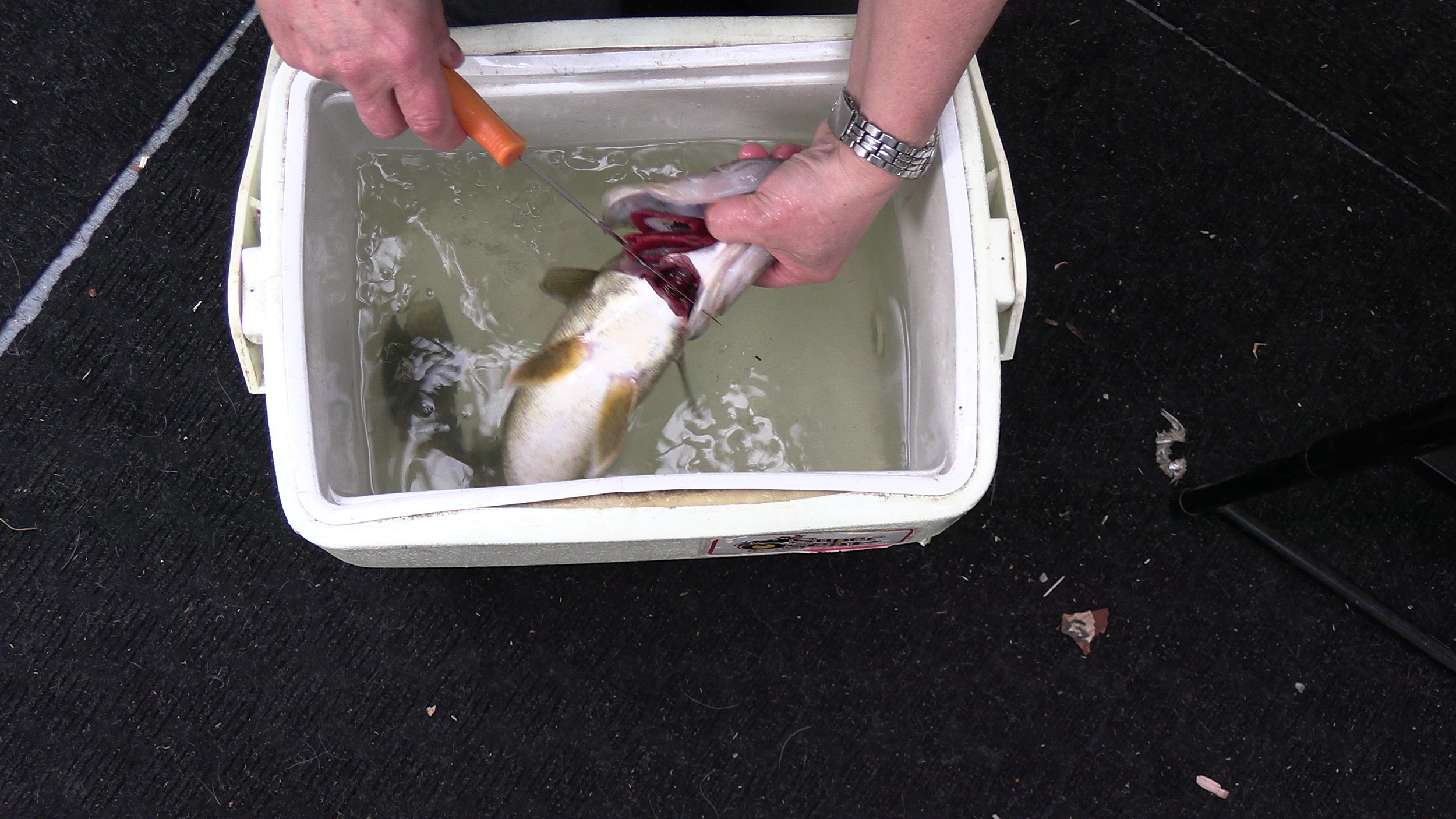
After a hard head strike, use a filleting knife, cut away from yourself to cut the artery from the gills. The fish will bleed out instantly and ensure an ethical harvest in complete.
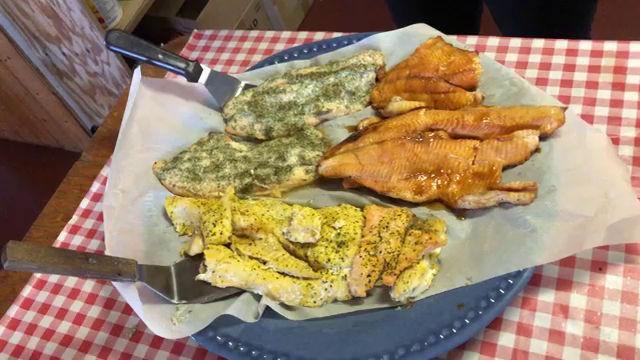
having fresh fish as part of your diet is an excellent way of staying connected to the environment. It gives us the reason to protect the wildlife and the environment on which we all live. This is fresh Lake Trout caught up at Aylmer lake Lodge with Canadian Wildlife Adventures.
