
Being prepared : ICE Safety GuidelInes
Being Prepared- Ice Safety Guidelines
By Keith Denoncourt
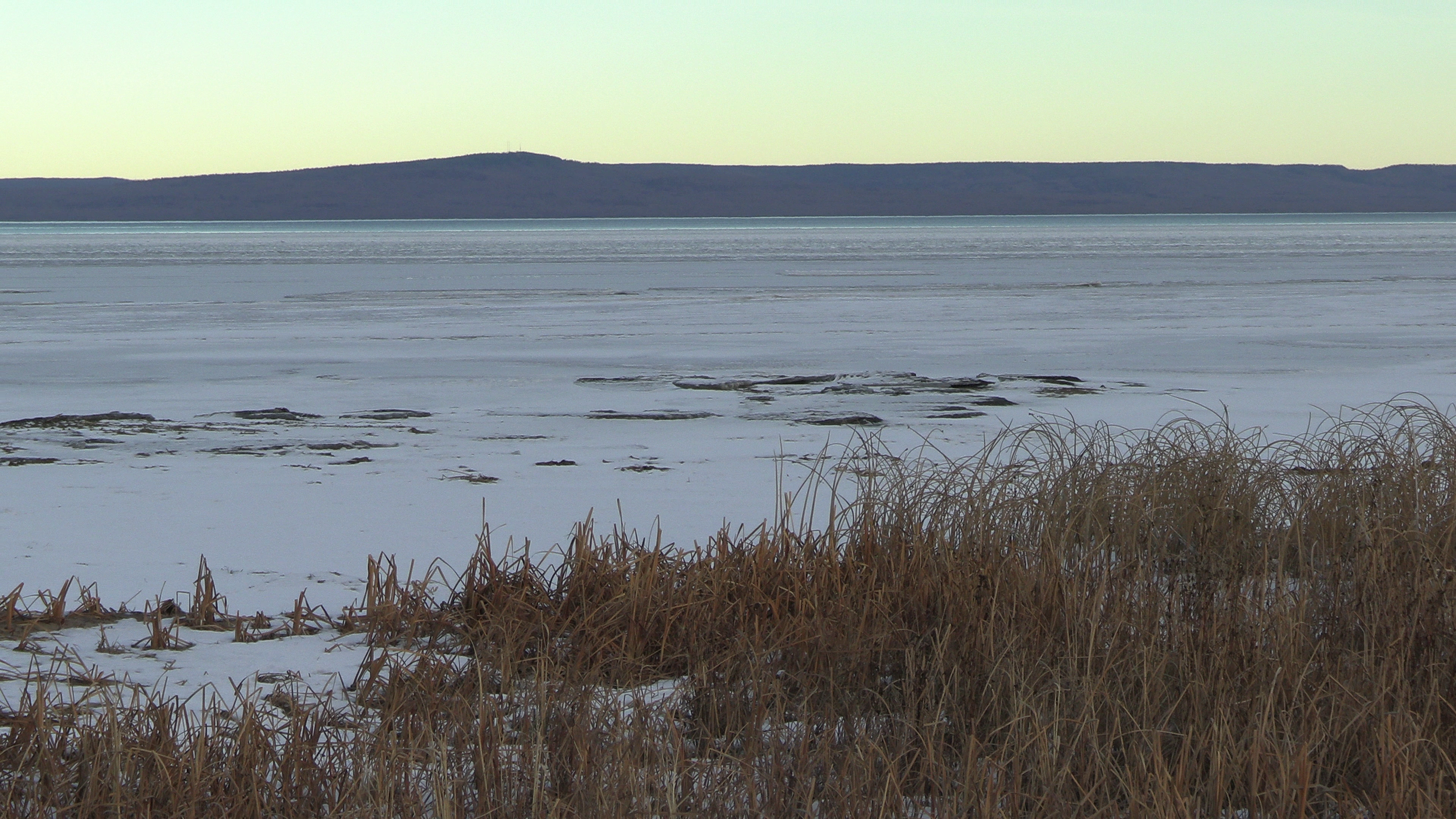
There are significant dangers when going on to any form of frozen water body. Special cold weather considerations, and winter safety adaptations, have to be put in to place as to mitigate any cold weather emergency. Irregularities, and unpredictable weather patterns, can create hidden hazardous ice conditions.
My hunting season is coming to an end, and I am in the process of completely regrouping my gear. I do a complete re-set, and re-test, of every piece of equipment. I am preparing for my next set of adventures. This time the adventures will be occurring in the Canadian Winter. Often times involving potentially frozen water. I wish that I could say that this time of transition is recreational, but honestly I put a lot of time and effort in to completely revamping my equipment, and my gear. Piece by piece, bolt by bolt, everything is rechecked and very specifically prepared for the next immediate use. This is specifically designed to help mitigate the extreme challenges of working in what can be well below freezing conditions. Too often I see Outdoorsman rush this process with severe consequences. The side effect of this is that Nature truly does not care. There will be natural consequences for poor choices. Falling through the ice is what most people fear the most. However getting stuck, broken down, or lost, can have just as serious consequences. Impulse decisions can have serious, if not fatal health risks. Hypothermia, frostbite and drowning are all very real when working on ice. As well, the economic toll on broken equipment, personal rescue, recovery plus the imposed personal hardships may truly not be worth the risk. Getting fully prepared for the worst case scenario, and by frequently physically testing the ice enroute to your location is by the far one of the best ways to mitigate and prepare for any potential ice rescue emergency.
I am not trying to discourage winter outdoor recreational activities at all. My main advice is once you have prepared yourself, and your gear, for the worst possible scenario, test the ice quality, and thickness, at regular intervals. Stay well within the advised guidelines. It , however has to be understood that ice quality and condition are not 100% regular across any body of water. Both quality of ice and ice thickness change over distance and dangers can easily be hidden with a thin layer of snow. Especially in what could be considered moving bodies of water. Without the actually physical testing of the ice, the natural and man-made weak spots, can easily be extremely hard to detect. I have provided the “Minimum Ice Thickness” guidelines as created by the Alberta Conservation Association. I would like to stress that these are the only the minimum guidelines and that ice conditions exist that have variances. These variances create extremely well hidden weak spots that need to be avoided. I have included some pictures of some natural and man made variances for your reference. When in doubt, stay off the ice!
Thank you for respecting the outdoors, and for taking ice safety into consideration during all of your winter outdoor activities. As always, be safe in the outdoors, and sponsor a Non Profit Conservation organization.
-Keith
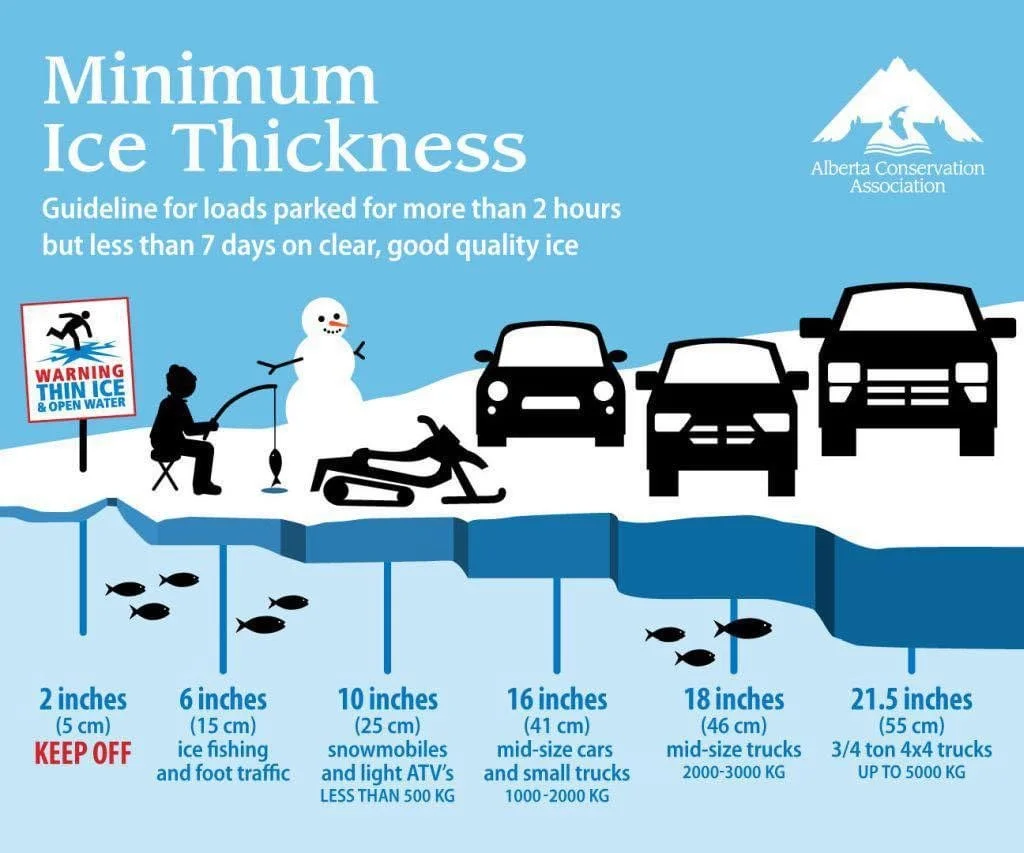
These are only the minimum guidelines. Ice conditions are seldom uniform. There are hidden natural, and man made, weak spots in ice that can easily be hidden with a small layer of snow. Frequent physical testing must occur to determine not only the ice thickness, but the overall quality of the ice as well. Several key factors need to be considered before heading out on to any form of water body.
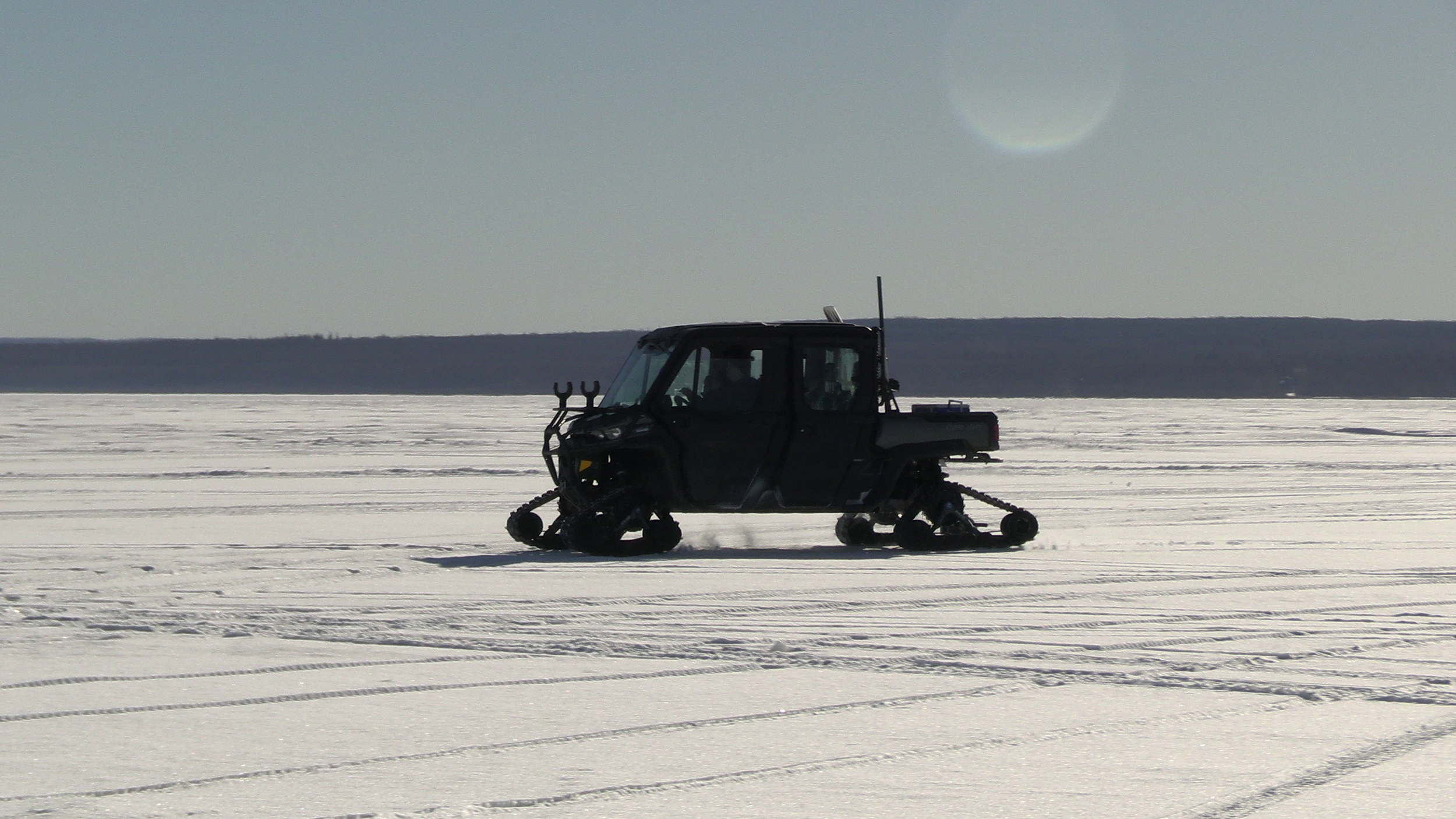
Comfort, safety and protection against the elements have to be considered. Hypothermia and Frostbite also need to be prevented and planned for. Always prepare for the worst possible conditions. Having the right tools and equipment in place prior to any emergency is essential for self rescue and recovery.
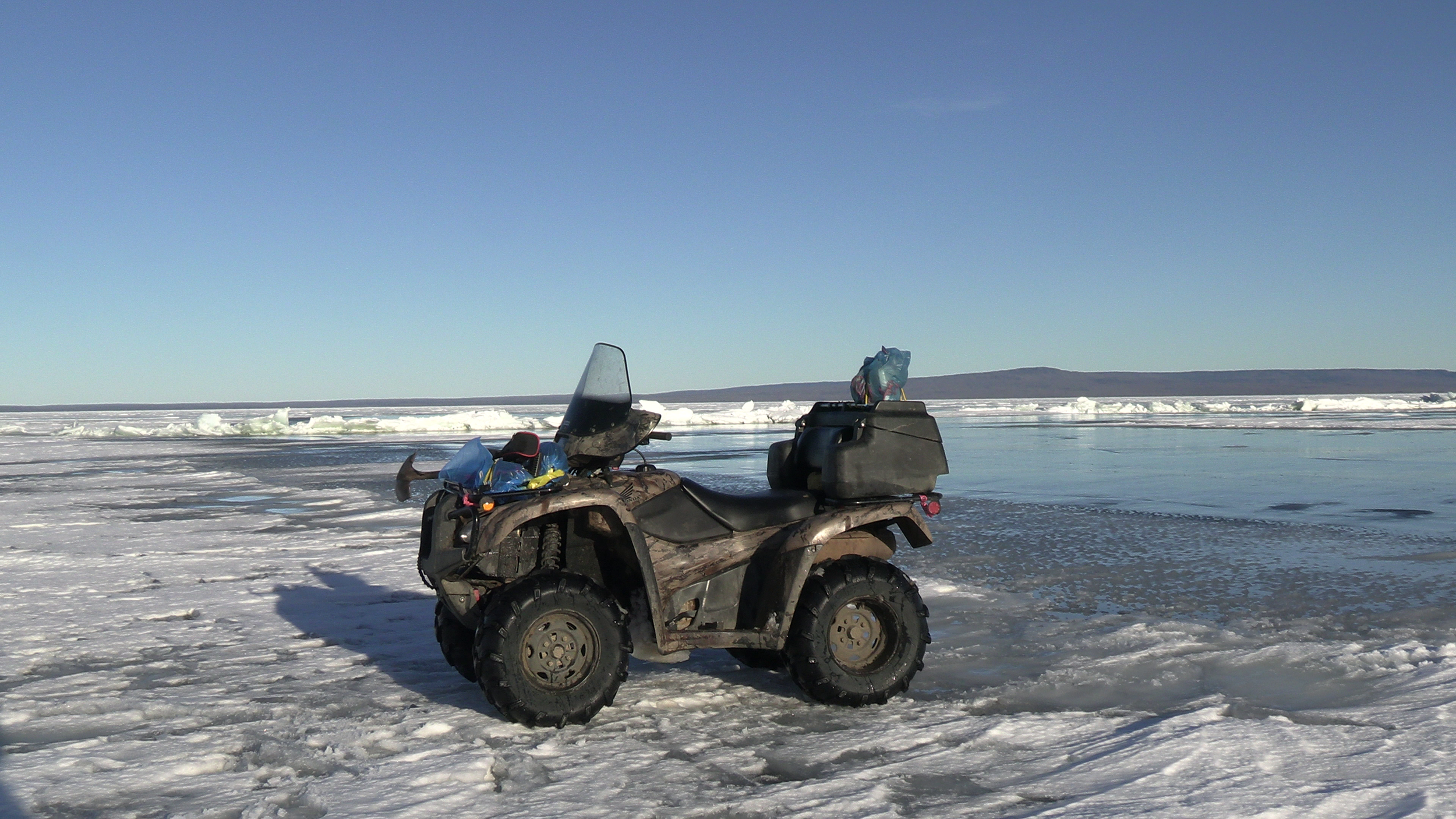
Using an ATV that is 100% fully equipped for extreme ice weather rescue, as well as by working in teams, may help mitigate the dangers incurred when physically testing ice thickness and quality.
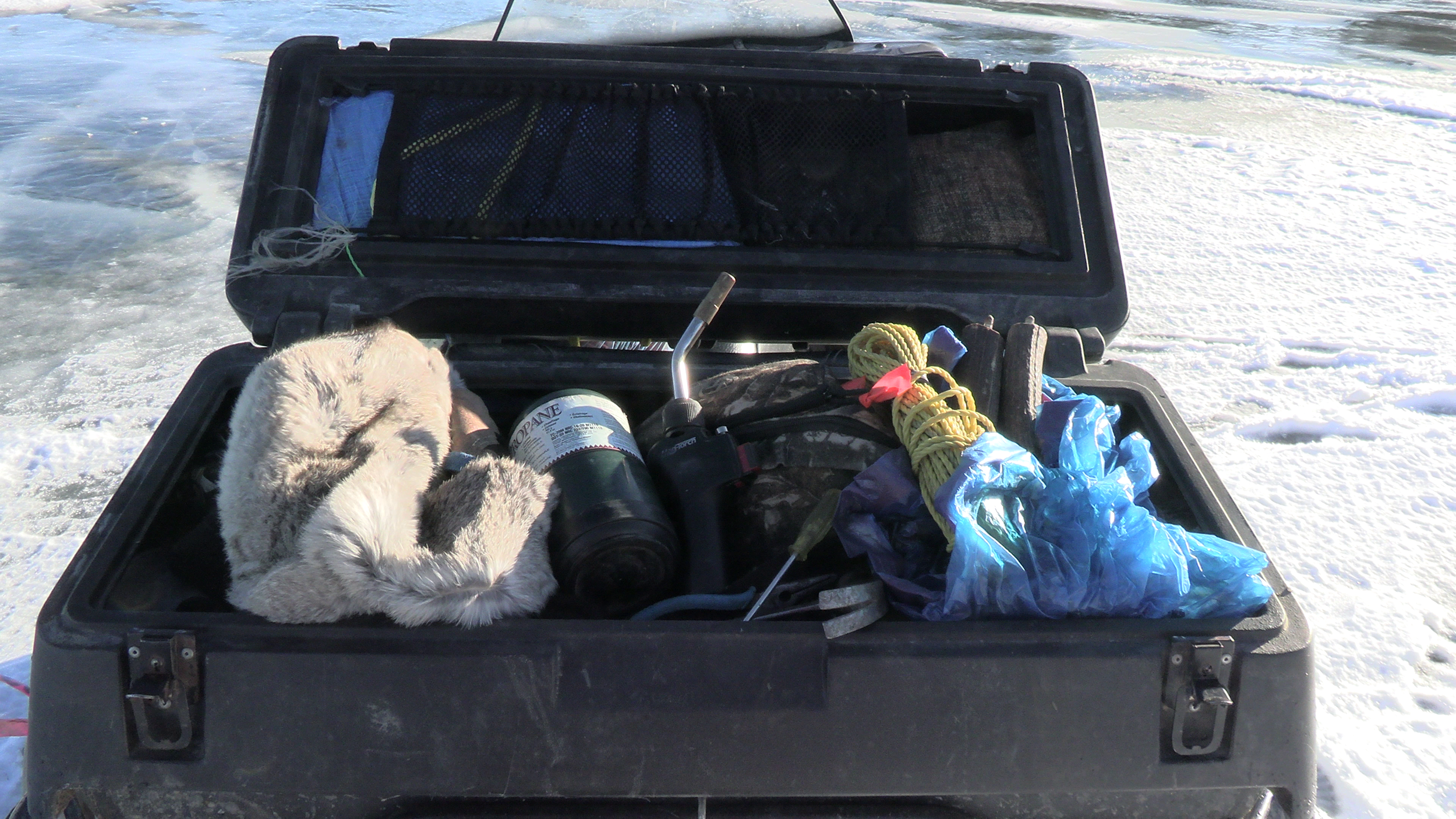
My floatation vest, and rescue lines, are in a protective clear recycle bag. They are placed on top of both of my ATV’s. This is for immediate emergency access. My float ropes, rescue lines, and ice claws all have personal rescue knots that have already been pre-tied in to place for immediate use. Towels, fresh clothes, blankets, and extreme fire lighting gear are tested and ready for immediate use. Immediate evacuation, with immediate Hypothermia and Frostbite treatments are pre-planned and ready to activate.
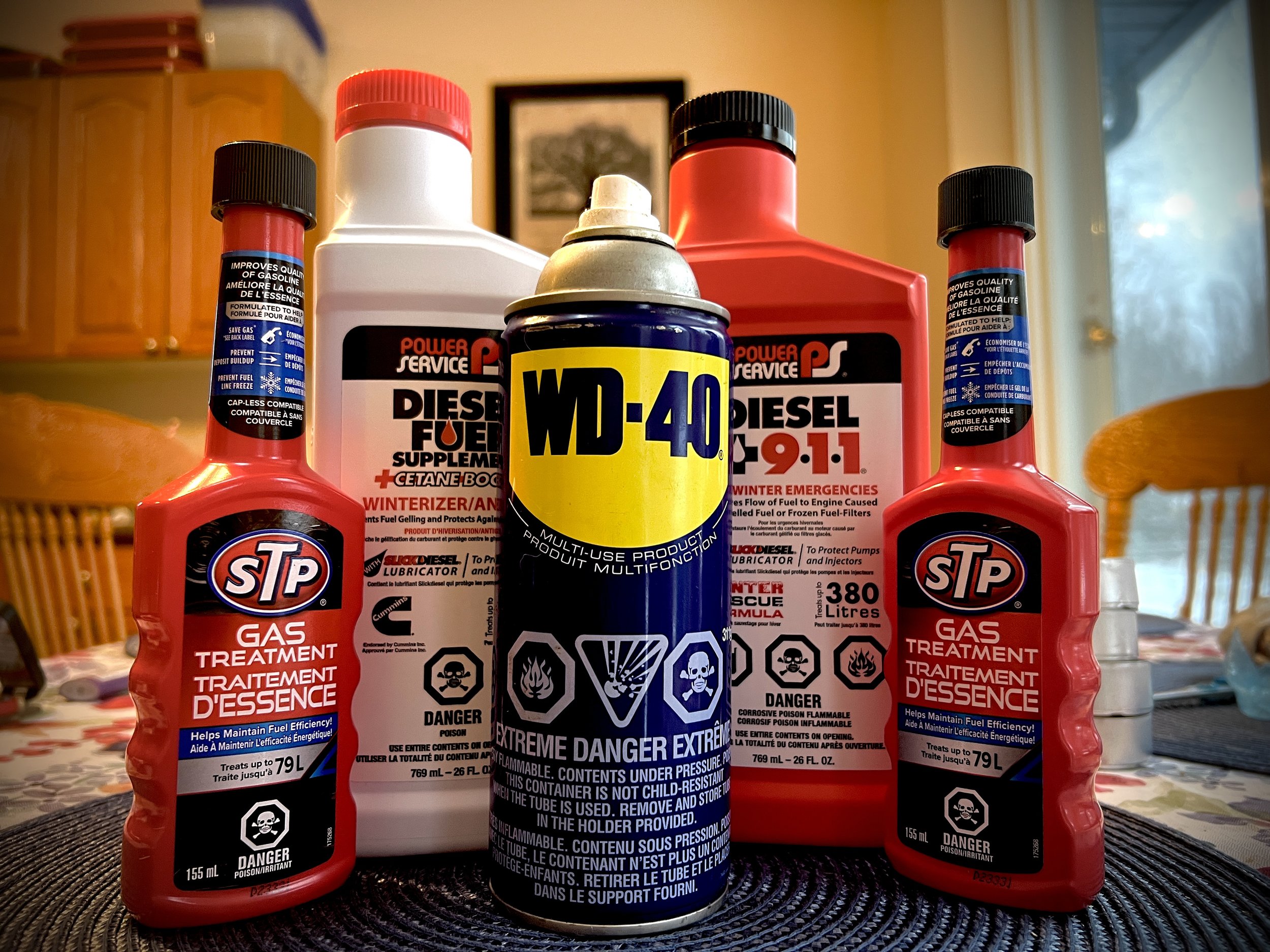
Winter comes with special consideration for all of your vehicles. Special chemical winter treatment may be needed in extreme weather for your ATV. Please consult your owners manual.
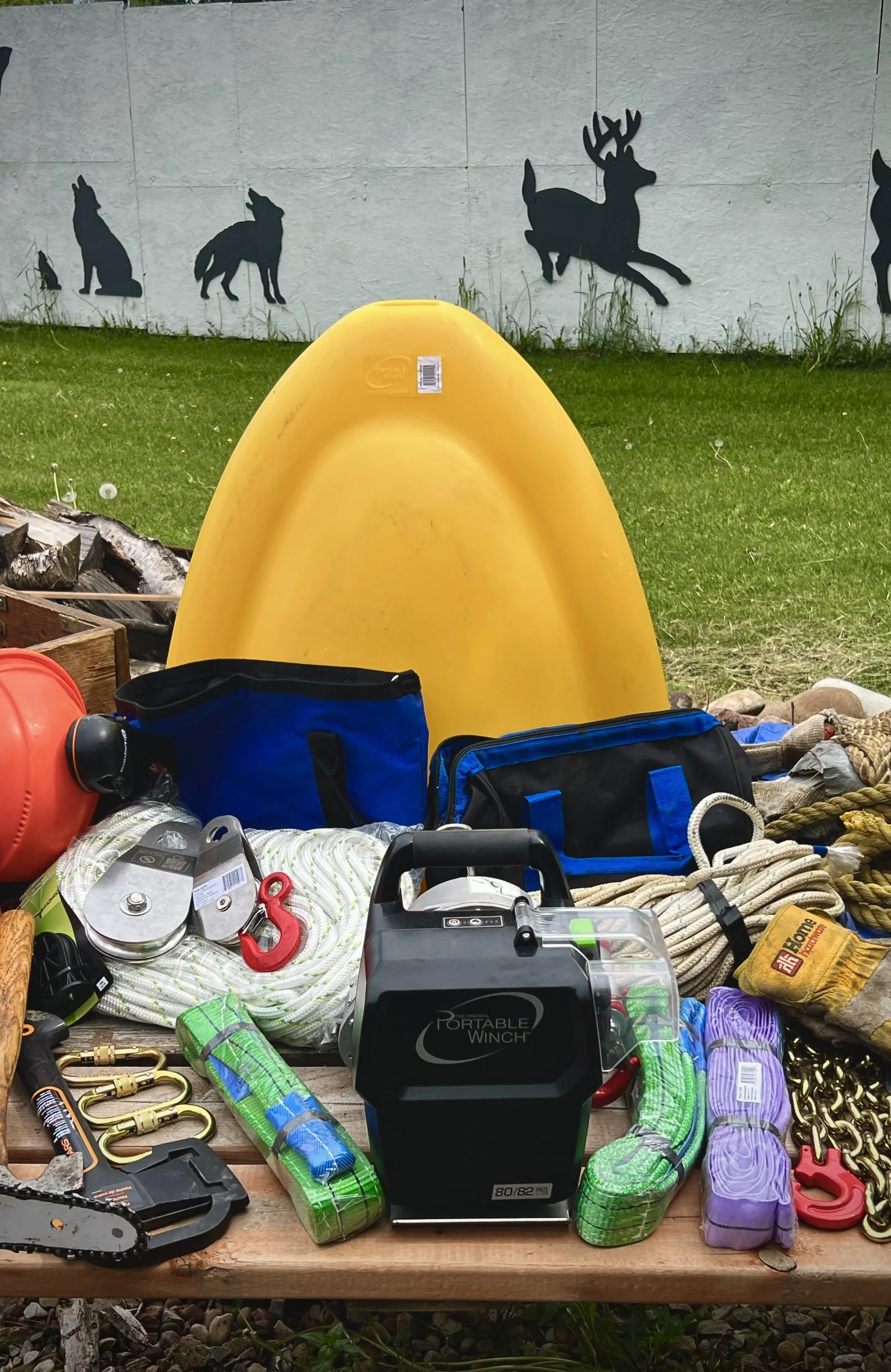
I use my Portable Electric Winch as part of my self rescue / recovery kit. Everything I need to tow another ATV, or get myself or another ATV unstuck, is readily available for immediate use.
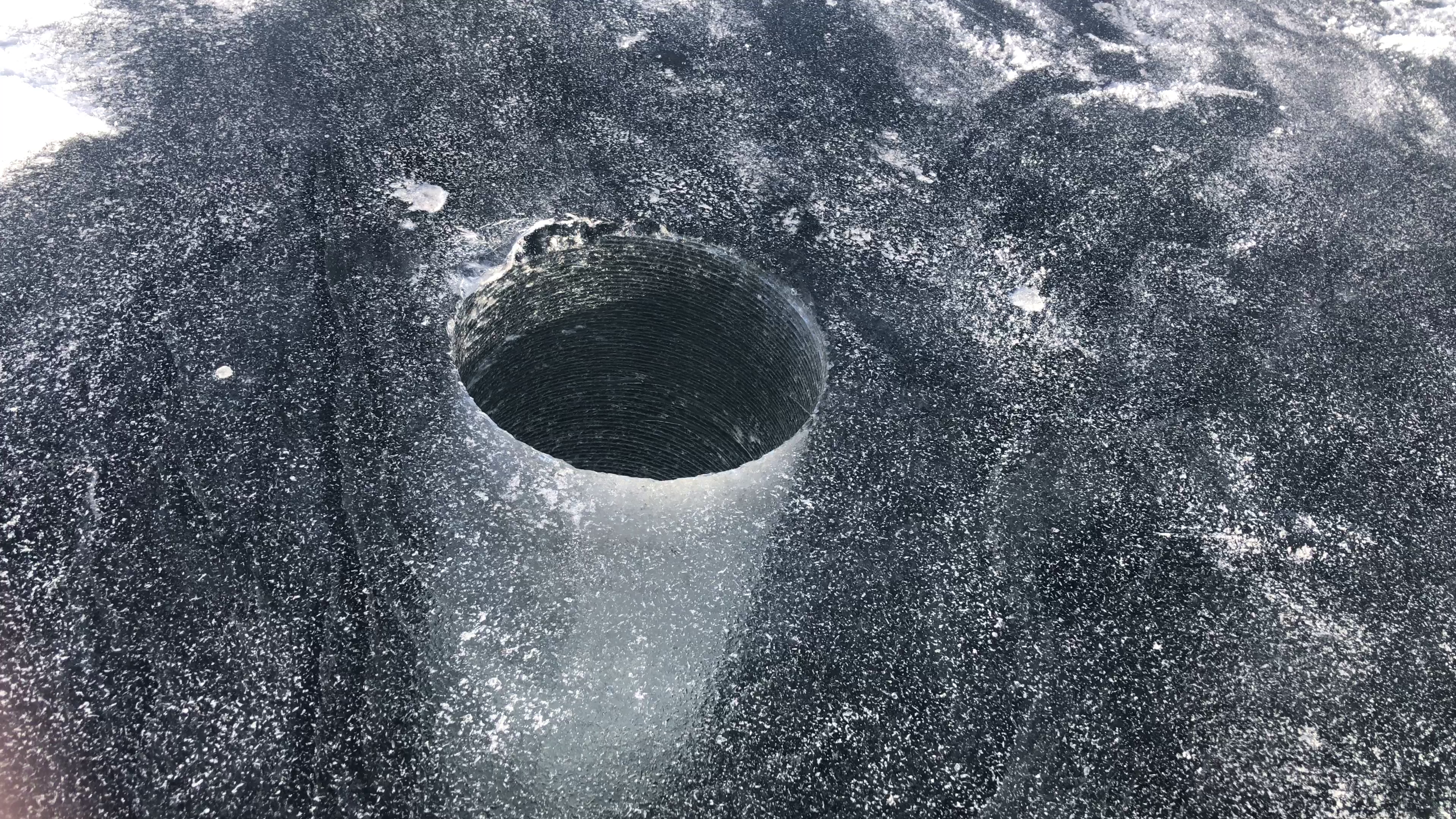
Clear ice is considered to be strong. The testing of several holes is highly recommended enroute to your location. Using a Team, keep spaces between vehicles during travel or times of ice quality uncertainty.
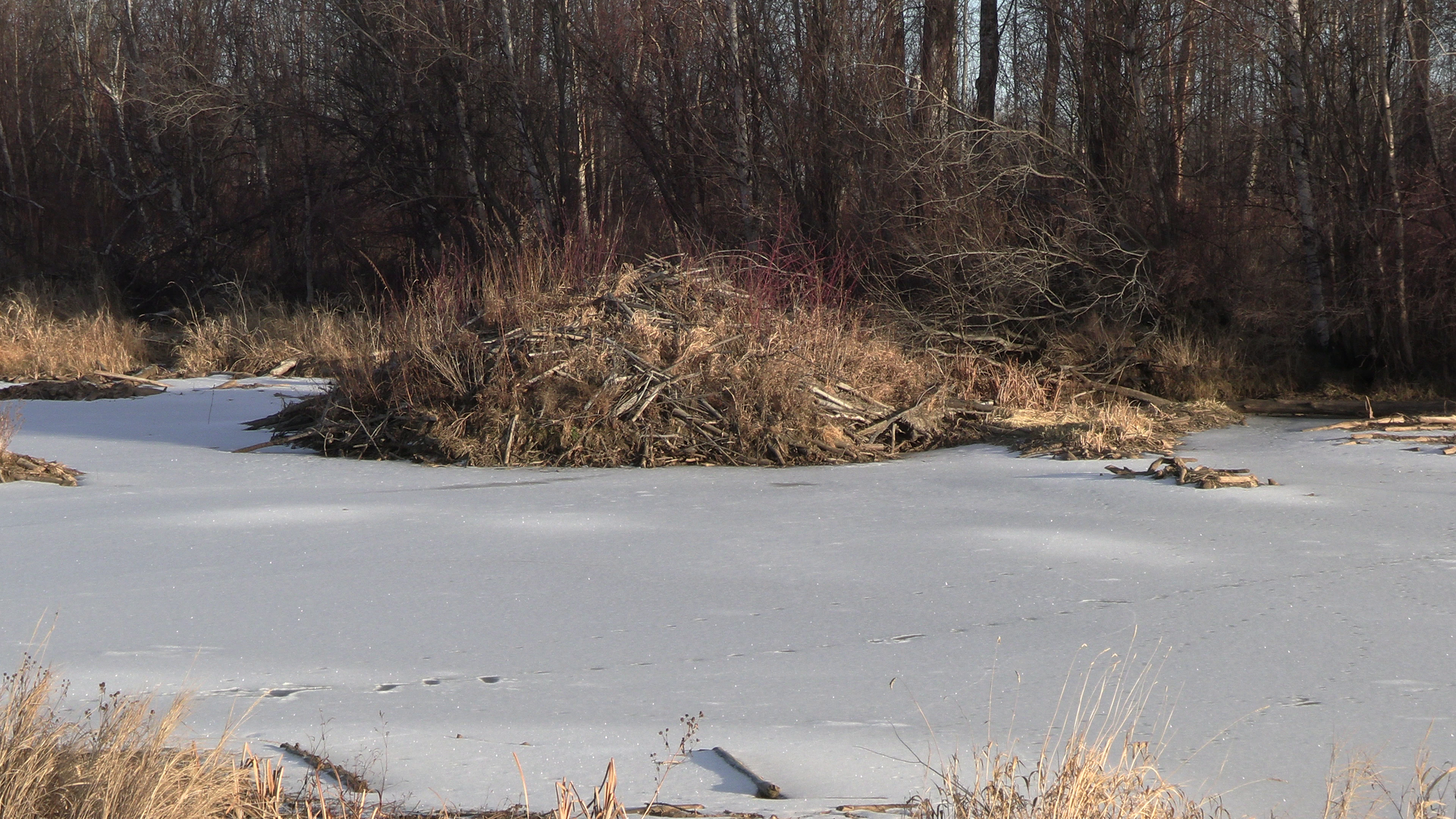
Beavers create uneven wear patterns under the ice that can not be seen from the surface. Avoid travelling on all moving bodies of water, or bodies of water with indicators of biological irregularities.
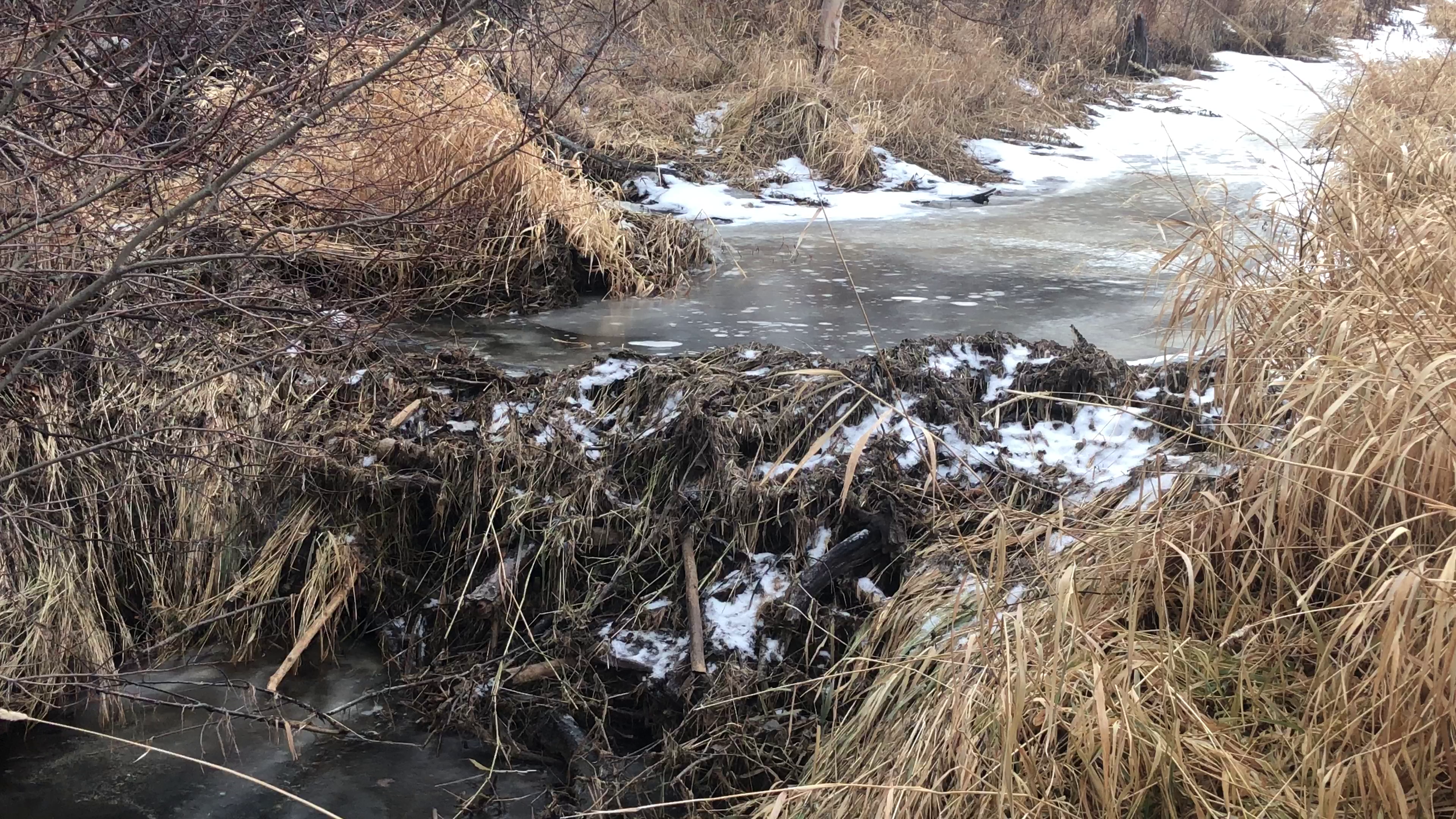
These are travel corridors in a small beaver damn that was created by the beavers when then swim under the ice. These create weak spots in the ice. These can not be seen from the surface when covered in snow.
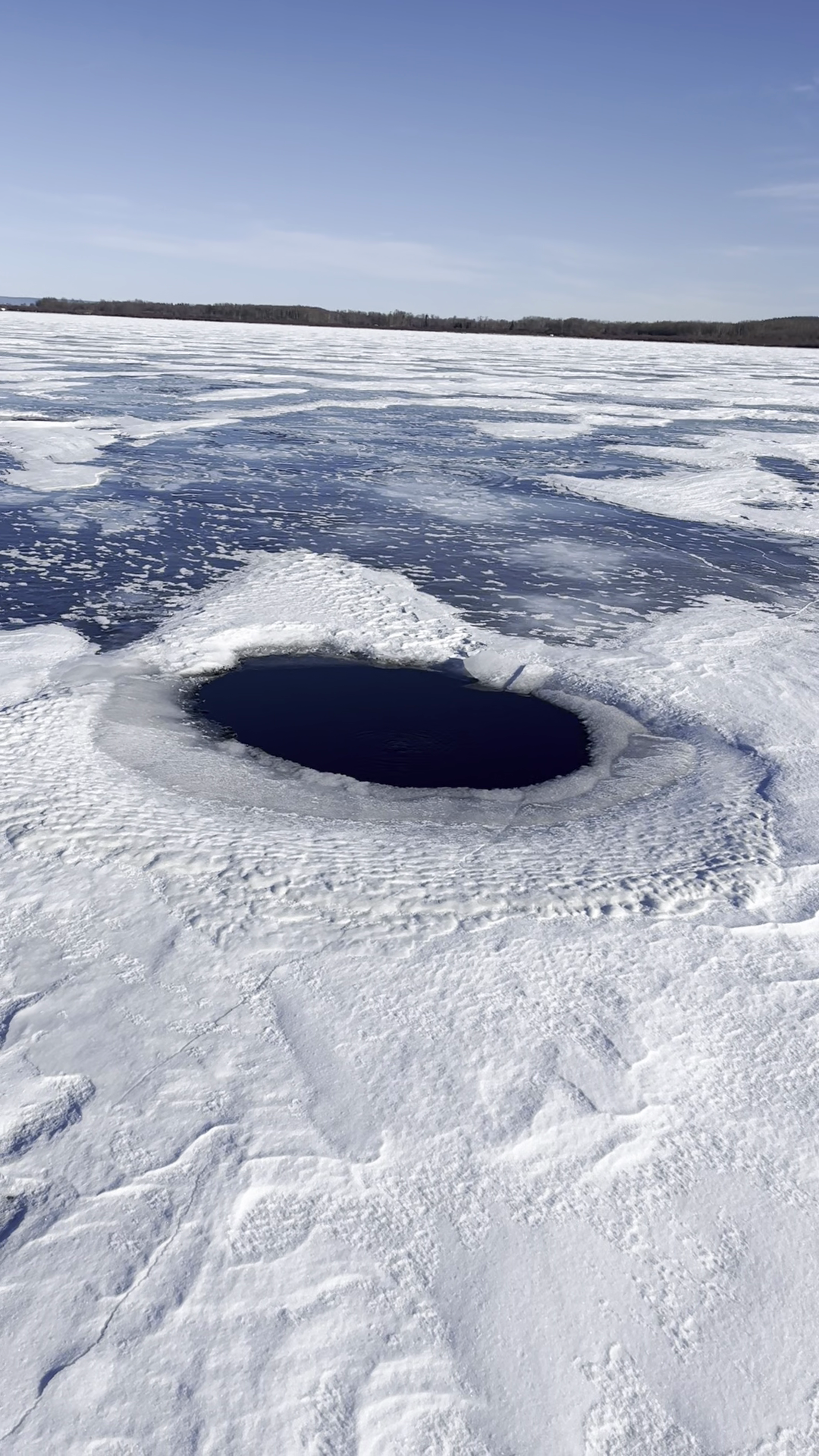
This is an example of an active gas pocket on Lesser Slave Lake, Alberta . It is actively bubbling in - 15 C. This picture was sent to me by one of our local ice fishing Guides Kevin Schafer. This hole easily gets hidden when it snows.
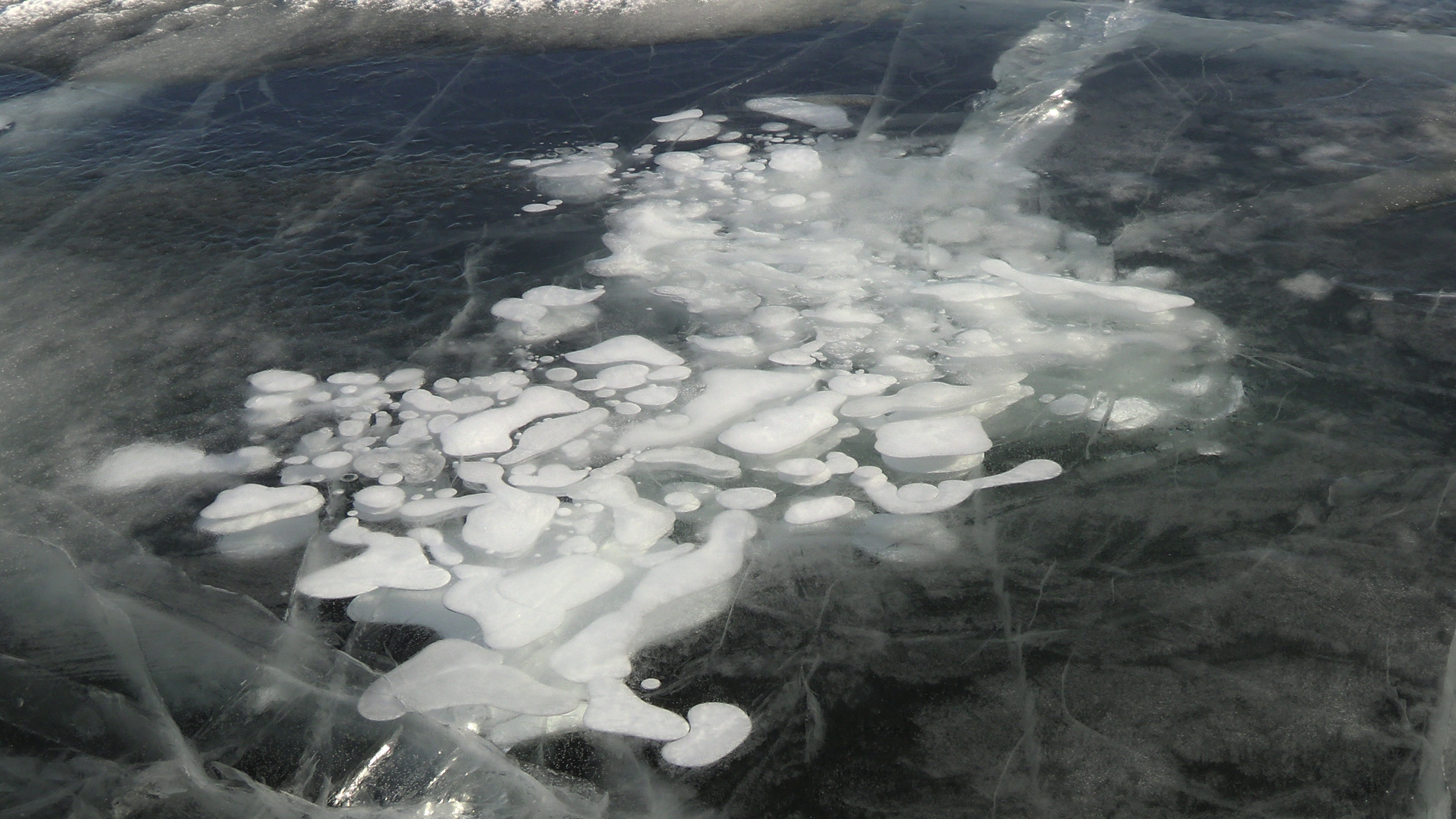
Bubbles of gas pockets, or white colored ice, is an indicator of weak ice.
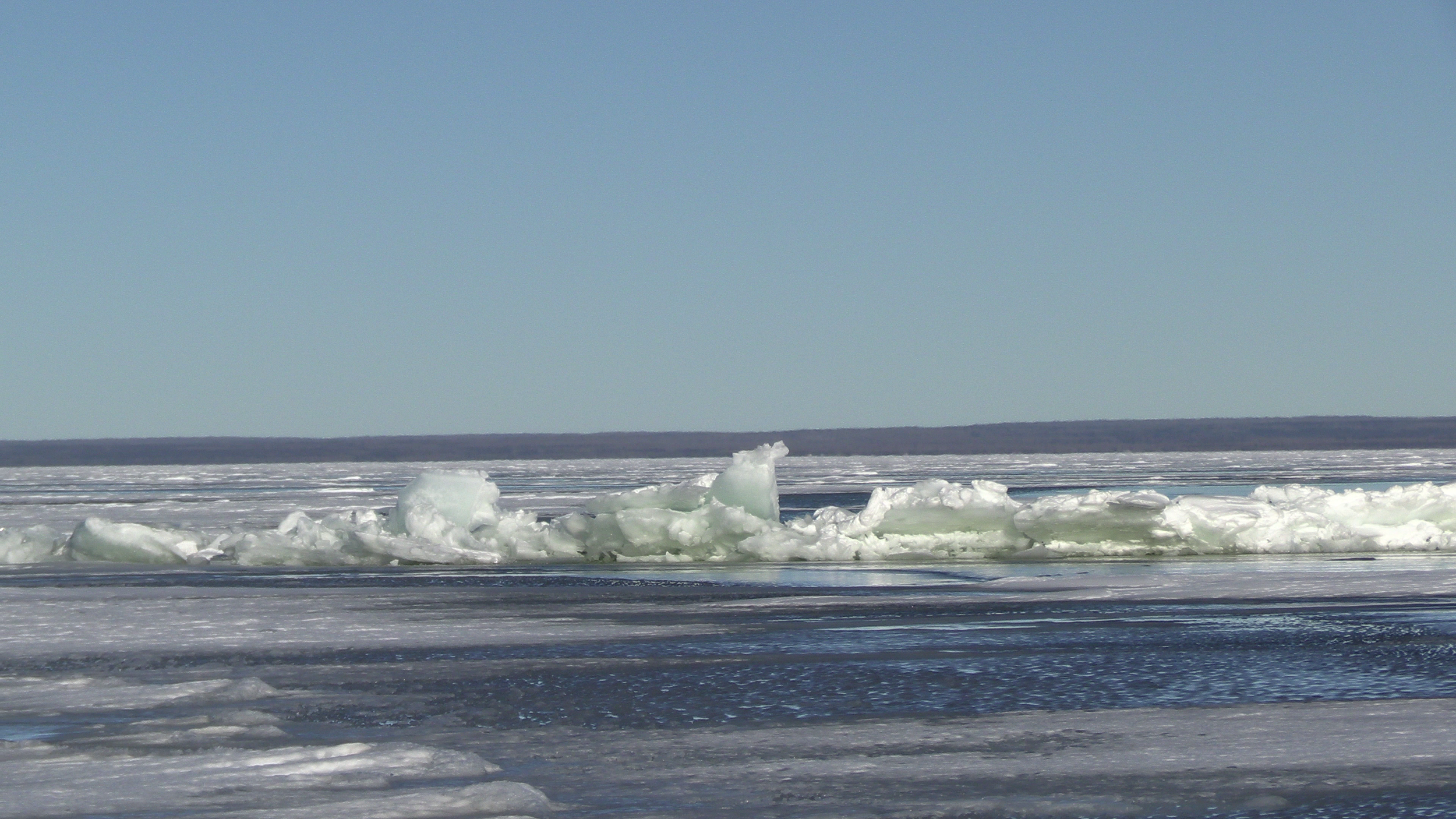
Ice ridges create open pockets of water. There are significant weak areas of either side of ice ridges.
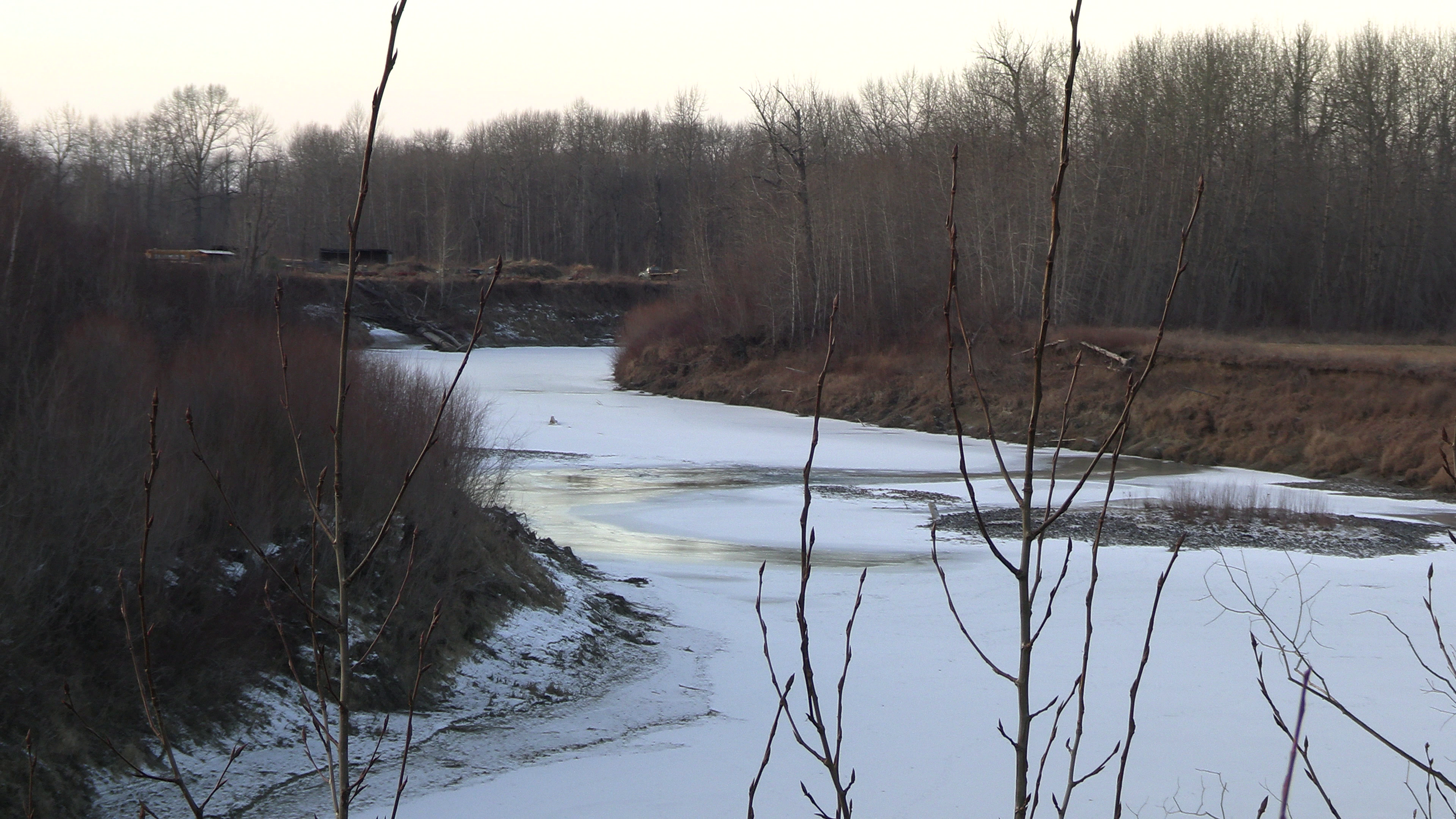
All creeks, rivers, springs, industrial ponds, and streams are examples of moving bodies of water. This creates irregularities in ice quality and conditions. Hidden open water dangers can exist anywhere. Crossing, or travelling along, any moving body of water is extremely dangerous and should be avoided.
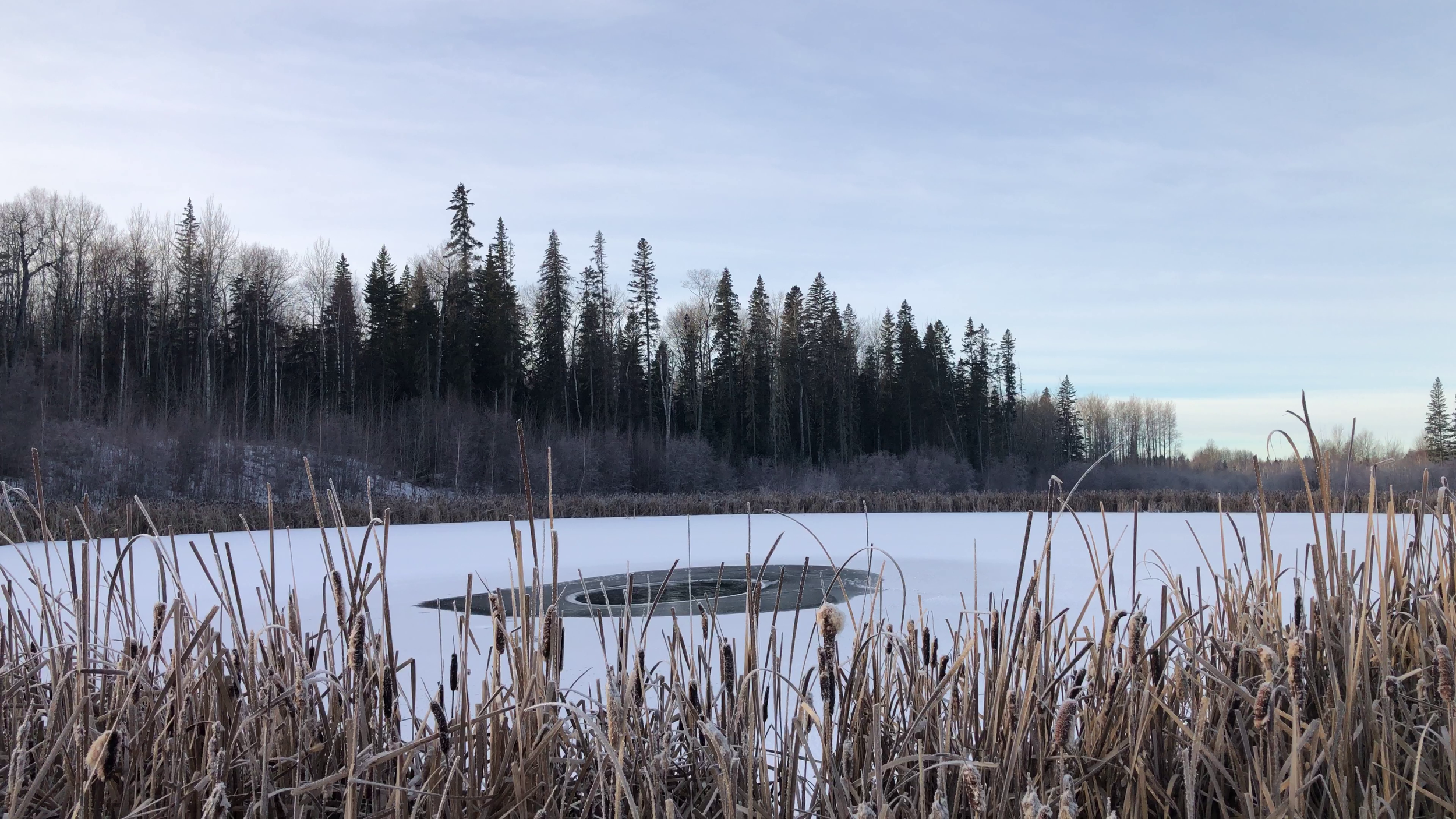
This is a mechanical manmade opening caused by a fresh water pump. On cold days these weak areas can be hidden by a small layer of snow. Pay attention to your surroundings and avoid all water bodies that are associated with industrial use.
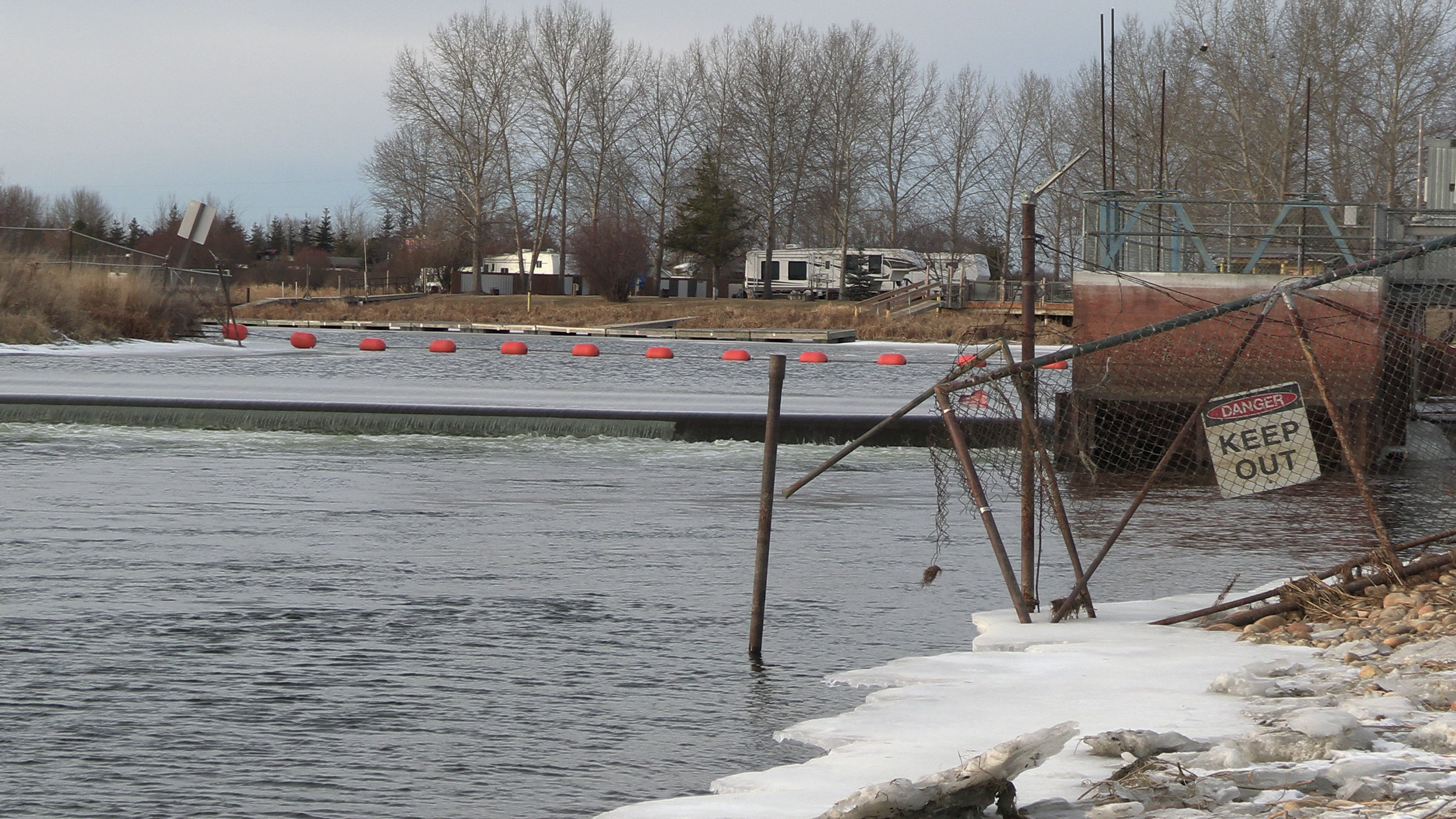
All moving water creates irregularities in ice quality and condition. These areas are extremely dangerous in all weather conditions and need to be avoided.
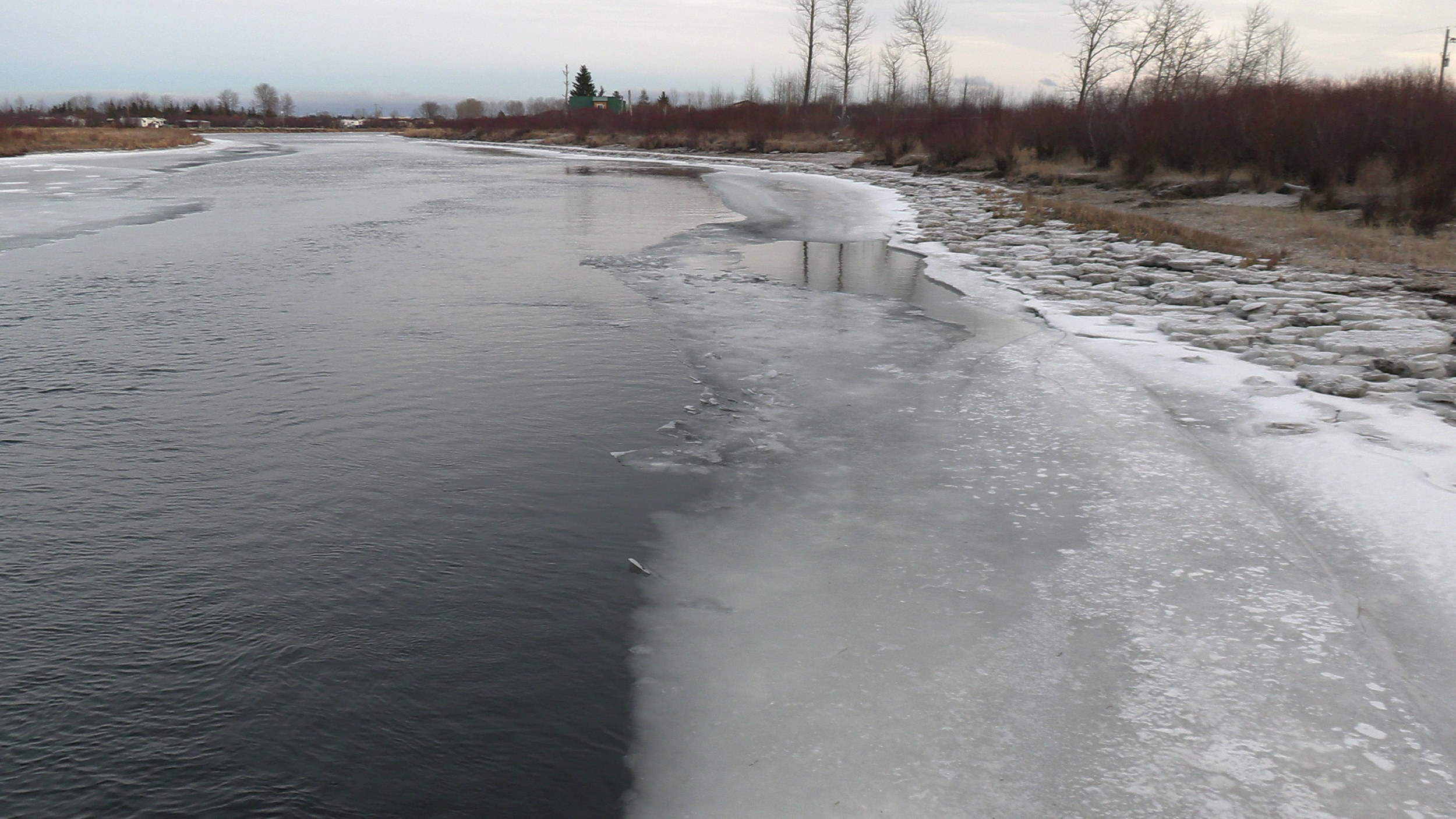
Ice freezes at different rates throughout the season. Hidden weaknesses in ice structure exist in all moving bodies of water. These weaknesses can easily be hidden with a thin layer of snow.
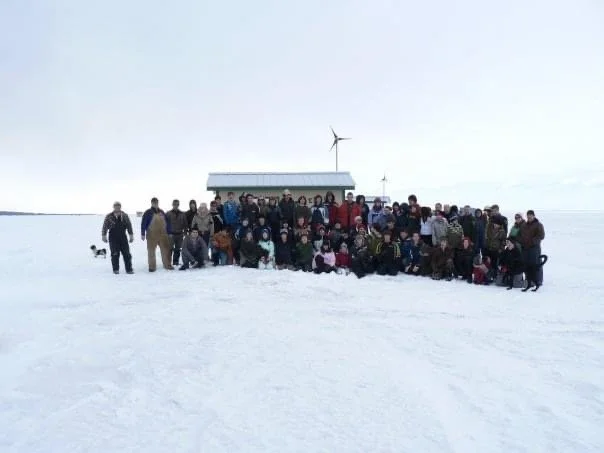
This was one of the largest Outdoor Education classes that I have ever taken Ice Fishing. Special thank you for all of the Professional volunteers that helped me bring this project to life safely !
